
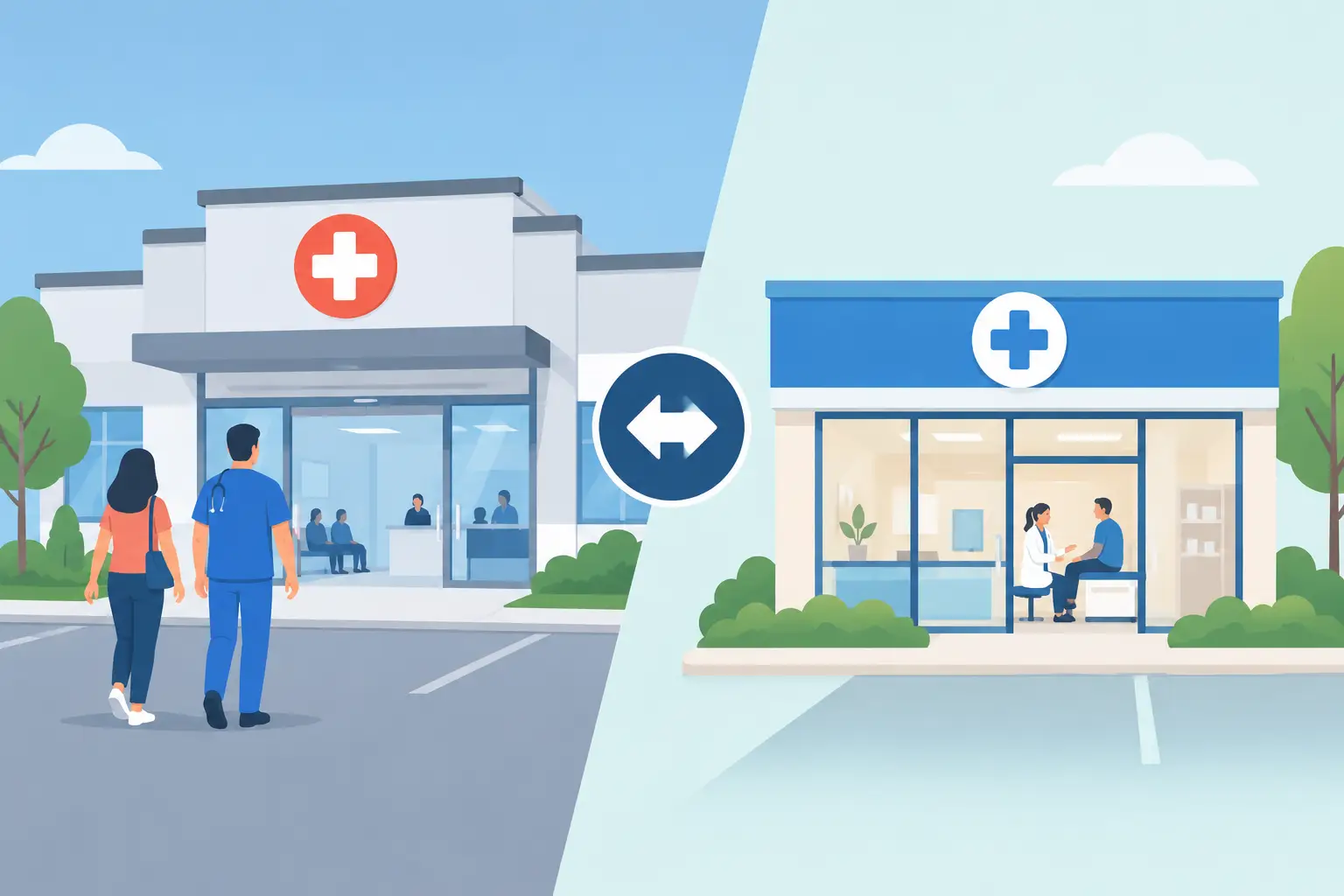
A fever that will not ease, a painful UTI, a sprained ankle after practice, or a cough that is getting worse can put families in a familiar position: you need care today, but the emergency room may not be necessary. When comparing urgent care versus retail clinics, the right choice depends on what is happening, what services you need, and how quickly you need answers.
Both options can help with common health concerns. The difference is usually in the level of evaluation, diagnostics, treatment capabilities, and the range of services available. Knowing where each setting fits can help you avoid unnecessary waiting, get appropriate care, and move on with your day.
What Is a Retail Clinic?
Retail clinics are small healthcare sites often located inside pharmacies, grocery stores, or big-box retailers. They are built for convenience and generally handle a limited range of simple, routine concerns. Many are staffed by nurse practitioners or physician assistants and may offer same-day visits, walk-in access, or online scheduling.
A retail clinic may be a practical option for straightforward needs such as a minor sore throat, seasonal allergies, a simple rash, routine vaccinations, or a basic school physical. If you know the issue is mild and unlikely to require testing beyond a rapid swab, this setting may be enough.
The trade-off is scope. Retail clinics often have limited space, equipment, and testing capacity. If your symptoms require an X-ray, blood work, a more detailed exam, treatment for a work-related injury, or care that becomes more complex than expected, you may be directed to another provider.
What Urgent Care Can Treat
Urgent care is designed for non-life-threatening health needs that should not wait days for a primary care appointment. It provides a broader clinical option for patients who need prompt evaluation, testing, and treatment in one visit.
Urgent care commonly treats respiratory illnesses, cold and flu symptoms, sinus infections, ear pain, strep throat, nausea, vomiting, diarrhea, urinary tract infections, minor cuts, burns, sprains, strains, and uncomplicated fractures. It can also evaluate concerns that are difficult to sort out at home, such as persistent abdominal discomfort, dehydration symptoms, painful urination, or a cough with fever.
For Tampa Bay families, this matters when a child wakes up sick on a weekend, a parent cannot miss another workday waiting for an appointment, or an injury happens after a primary care office has closed. Walk-in urgent care offers a place to start when you need a clinician to assess the problem now.
Urgent care is not a substitute for emergency care. Call 911 or go to the emergency room for chest pain, signs of stroke, severe trouble breathing, uncontrolled bleeding, major trauma, loss of consciousness, severe allergic reactions, or any condition that may be life-threatening.
Urgent Care Versus Retail Clinics: Key Differences
The simplest difference is that retail clinics focus on a narrow set of low-complexity concerns, while urgent care can address a wider range of illnesses, injuries, and diagnostic needs.
Evaluation and diagnostic testing
Retail clinics may provide rapid tests for conditions such as strep, flu, or COVID-19, depending on the location. However, they typically do not offer on-site digital X-rays, extensive laboratory testing, blood work, or broader diagnostic services.
Urgent care centers are better suited for symptoms or injuries that may need more investigation. A patient with a lingering cough may need testing to help identify the cause. Someone who fell and has wrist pain may need an X-ray. A patient with urinary symptoms may need testing before treatment is prescribed. Access to diagnostics can make a meaningful difference because it helps the provider make decisions during the same visit rather than sending the patient elsewhere.
Injuries and wound care
For a small, uncomplicated concern, a retail clinic may be able to help. But urgent care is generally the stronger choice for minor injuries, including suspected sprains, strains, uncomplicated fractures, cuts that may need repair, minor burns, and work-related injuries.
An urgent care provider can examine the injury, determine whether imaging is needed, provide treatment, and explain next steps. That is particularly helpful when you are unsure whether an injury is minor or more serious than it first appeared.
Physicals and occupational services
Retail clinics may offer selected preventive services, but urgent care often provides a much wider range of physical examinations. This can include school and sports physicals, pre-employment physicals, surgical clearances, immigration examinations, and employer-requested drug screening.
For workers and employers, the distinction is especially important. Commercial drivers may need DOT physicals. Maritime professionals may need USCG-approved Coast Guard physicals. Employers may need workers’ compensation evaluations, return-to-work support, or pre-employment testing. These services require specific processes and documentation that a typical retail clinic may not provide.
Access and continuity of care
Both settings can be convenient, but availability varies by location. Retail clinics often operate around the retail store’s schedule and may have limited appointment slots. Urgent care centers are built around same-day medical access and can be a more dependable option when your primary care provider is unavailable.
At Express Care of Tampa Bay, patients can walk in for prompt care at Apollo Beach or Seffner, seven days a week. Same-day telehealth visits may also be an option for appropriate concerns, giving patients another way to speak with a provider without delaying care.
When a Retail Clinic May Be the Right Choice
A retail clinic can make sense when your need is clearly simple, non-urgent, and unlikely to require imaging or expanded testing. For example, you may need a routine vaccine, a basic screening, or evaluation for a mild condition you have experienced before.
It may also be a reasonable choice when you are already at the pharmacy and the clinic has an opening. If the provider determines you need a higher level of care, they can help direct you to urgent care, your primary care clinician, or the emergency room.
Still, do not minimize symptoms simply because you prefer the closest option. If you have worsening pain, a high fever, significant swelling, repeated vomiting, shortness of breath, or symptoms that have not improved as expected, choose a setting equipped to evaluate more fully.
When Urgent Care Is the Better Fit
Choose urgent care when the issue is not an emergency but needs timely attention and may require more than a basic exam. This includes illnesses with persistent or worsening symptoms, painful infections, minor injuries, possible fractures, cuts, rashes that are spreading, and gastrointestinal symptoms that are affecting your ability to stay hydrated.
Urgent care is also a practical choice when you need services beyond illness treatment. You may need an X-ray after an injury, blood work for a medical concern, a sports physical before the season begins, a drug screen for a new job, or a required occupational examination. Handling these needs in one local visit can save time and reduce the need for multiple appointments.
Before you leave home, bring a photo ID, insurance information if you have it, a current medication list, and any forms you need completed. For a child, a parent or legal guardian should be available to consent to care. For employment or occupational visits, ask your employer whether there are specific forms, billing instructions, or testing requirements to bring with you.
A Quick Decision for Tampa Bay Families and Workers
If your concern is mild and routine, a retail clinic may be convenient. If you need a more complete evaluation, on-site testing, injury care, physicals, or treatment for symptoms that cannot wait, urgent care is usually the better next step.
You do not need to have every answer before seeking care. When something feels wrong but does not appear life-threatening, walk in and let a qualified provider help you decide what comes next. Prompt care can bring clarity, treatment, and peace of mind when your family or workday cannot wait.