
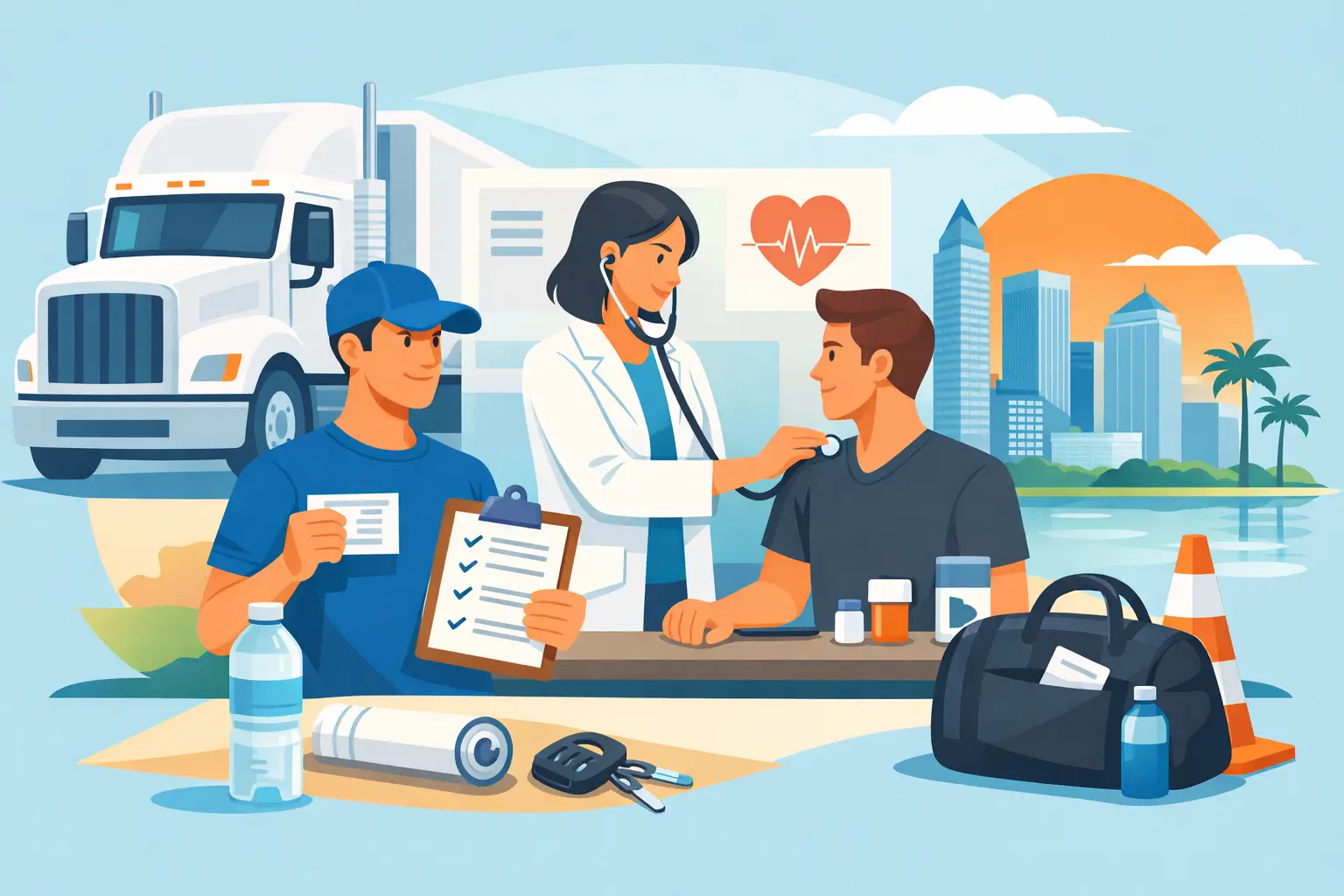
Commercial drivers keep Tampa Bay moving. Whether you operate a tractor-trailer, delivery vehicle, passenger bus, or other commercial motor vehicle, your medical certification is a required part of staying on the road. A DOT physical Tampa drivers can access close to home should be straightforward, but arriving unprepared can slow down the process or lead to a shorter certification period than expected.
The best approach is simple: know when your medical certificate expires, gather the information your examiner needs, and address ongoing health concerns before your visit. At Express Care of Tampa Bay, walk-ins are welcome for DOT exams, giving local drivers a convenient option when they need prompt occupational health services.
What a DOT Physical Is Designed to Check
A DOT physical is a medical examination required by the Federal Motor Carrier Safety Administration, or FMCSA, for many commercial drivers. Its purpose is not to make driving harder. It is to confirm that a driver can safely perform the physical and mental demands of operating a commercial vehicle.
The examination must be completed by a certified medical examiner listed on the National Registry of Certified Medical Examiners. If you pass, the examiner provides the appropriate medical certification paperwork for your employer, state licensing agency, or self-certification process.
Most qualified drivers receive certification for up to 24 months. That timeframe can be shorter when a driver has a condition that needs periodic monitoring, such as elevated blood pressure, diabetes, sleep apnea, or certain heart conditions. A shorter certificate is not automatically a failure. It may simply mean the examiner needs updated information or follow-up testing before extending certification.
Who May Need a DOT Physical in Tampa?
Many drivers know they need a DOT exam because their employer or motor carrier tells them. However, the requirement can also apply to independent owner-operators and drivers whose work crosses state lines.
You may need a DOT physical if you operate a commercial motor vehicle that meets federal size, weight, passenger, or hazardous-materials thresholds. Some local or intrastate driving jobs also require a DOT exam based on company policy, insurance requirements, or Florida regulations.
If you are starting a new job, renewing an expiring medical certificate, returning to duty, or changing employers, ask exactly what documentation the company needs. Requirements can vary by role. Bringing the wrong form or waiting until the last day of a certificate can create an avoidable work interruption.
How to Prepare for Your DOT Physical Tampa Visit
A little preparation gives the medical examiner a clearer picture of your health and can make your visit move faster. Bring a valid photo ID and any employer forms you were given. If you use corrective lenses, hearing aids, or other devices needed for driving, bring them and wear them during the exam.
Medication information matters. Bring a current list of prescription and over-the-counter medications, including the dose and the reason you take each one. If you have recently started a medication, changed a dose, or been prescribed a medicine that may cause drowsiness, be ready to discuss it. Certain medications do not automatically prevent certification, but the examiner may need more details to determine whether they affect safe driving.
Drivers managing ongoing medical conditions should bring relevant records. This could include a recent note from a treating provider, test results, a medication list, or proof that a condition is controlled. For example, a driver with diabetes may need recent blood sugar information. A driver with sleep apnea may need compliance documentation for CPAP therapy. Someone with a history of heart disease, seizure disorder, or a recent surgery may need a specialist’s clearance.
If you have high blood pressure, do not rush into the appointment after multiple cups of coffee, nicotine use, or a stressful morning if you can avoid it. Sit calmly beforehand and take your usual prescribed medication as directed. Never skip or double a dose to influence a reading. The goal is an accurate result that reflects how well your condition is managed in real life.
It also helps to drink water before the visit. The DOT exam includes a urine sample, and being unable to provide one can delay completion. The urinalysis typically checks factors such as sugar, protein, blood, and specific gravity. It is not the same as a DOT drug screen. If your employer also requires drug testing, confirm whether that service is scheduled separately.
What Happens During the Exam
A DOT physical generally begins with a health history questionnaire. Be honest and complete. The examiner will ask about past illnesses, surgeries, medications, hospitalizations, vision concerns, sleep issues, mental health conditions, substance use, and other factors that could affect driving.
Next comes the physical examination. Expect your height, weight, blood pressure, pulse, vision, and hearing to be checked. The examiner also evaluates your heart, lungs, abdomen, spine, joints, reflexes, balance, and general neurologic function. The exam looks for limitations that could make it unsafe to sit, turn, climb, brake, react quickly, or handle the demands of commercial driving.
Vision standards are an area where preparation helps. If you drive with glasses or contact lenses, bring them. The same applies to hearing aids. A driver may be medically qualified while using these aids, but they need to be available for the examination and while driving.
The appointment is also a chance to ask practical questions. If a condition could affect your certification length, ask what follow-up documentation would be helpful. Clear next steps are far better than guessing after you leave the clinic.
Understanding Possible DOT Exam Results
There are several possible outcomes after a DOT physical. You may receive a medical certificate valid for the standard period, or you may receive a certificate for a shorter period with a recommended recheck. In some cases, the examiner may request additional records, testing, or a letter from your treating provider before making a final determination.
A pending result does not always mean you are disqualified. It often means the examiner needs enough information to make a safe, documented decision under FMCSA standards. Respond quickly if additional paperwork is requested. Delays frequently happen because a driver waits too long to contact a specialist or retrieve medical records.
Some conditions require careful review. Elevated blood pressure may result in a shorter certification period until readings improve. Diabetes can require documentation showing it is appropriately managed. Sleep apnea may require proof of treatment compliance. A recent injury or surgery may require evidence that you can safely perform job duties without restrictions that affect driving.
The details depend on your individual health, the applicable regulations, and the medical examiner’s findings. No two drivers have the exact same history, so avoid relying on another driver’s experience as a guarantee of your own result.
Do Not Wait Until Your Certificate Expires
A DOT medical certificate has an expiration date, and missing it can put your driving status and work schedule at risk. Check the date well before your deadline. Scheduling or walking in early gives you time to handle a follow-up request if the examiner needs records, additional testing, or a specialist’s input.
This is especially important if you have a monitored condition or know your certification was shortened at a previous exam. Plan your next visit weeks ahead instead of treating the renewal as a last-minute errand. For drivers with changing schedules, seven-day availability and walk-in access can make it easier to complete an exam without losing valuable work time.
Bring your documents, take your usual medications as prescribed, and give yourself enough time to address any follow-up needs. A prepared DOT physical visit helps you focus on the road ahead, your job, and the people counting on you to get there safely.