
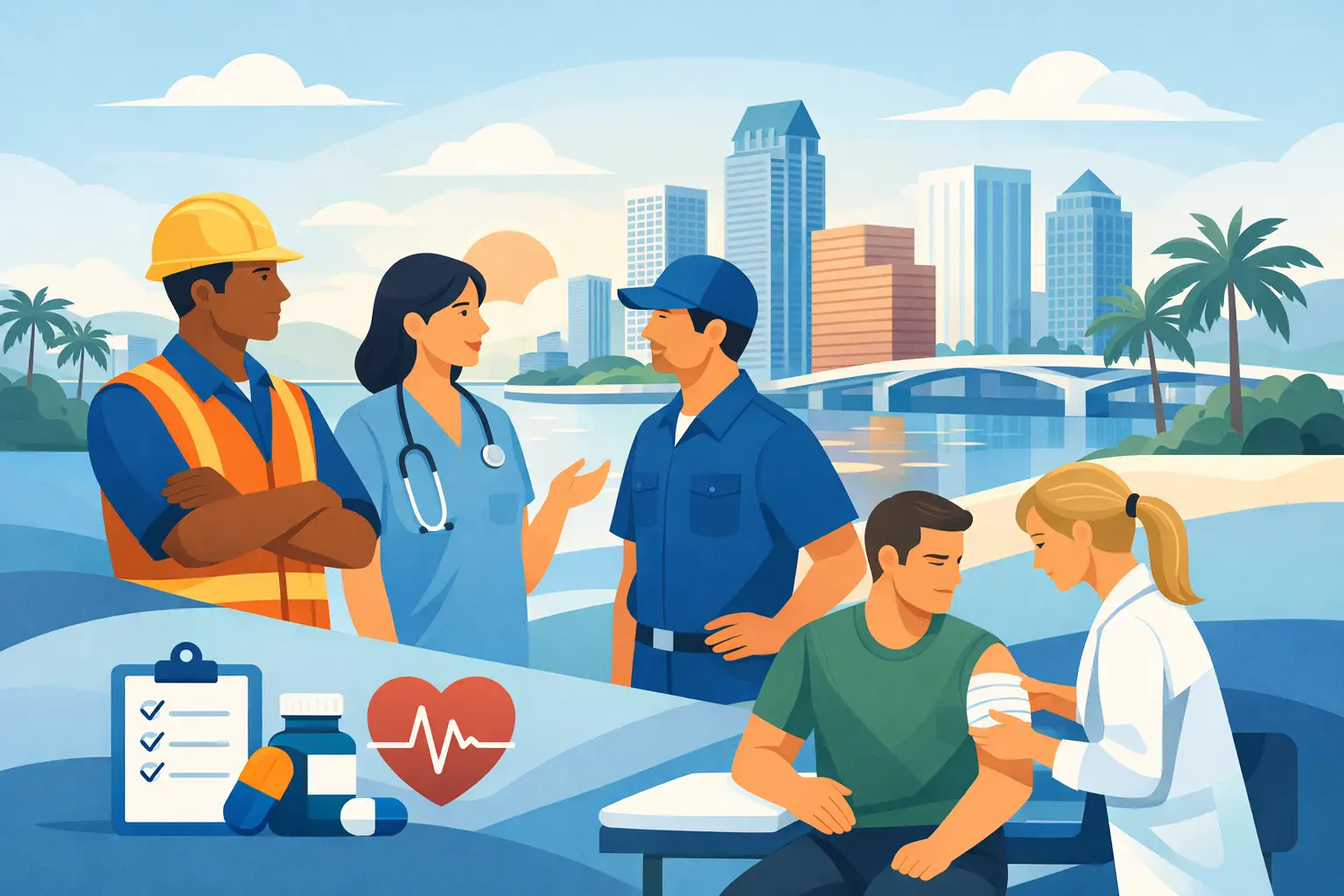
A new hire needs a physical before their first shift. A commercial driver needs a DOT exam before a deadline. An employee gets hurt on the job and needs prompt evaluation. These are everyday occupational health needs, and waiting weeks for care can slow down a worker, an employer, and an entire team.
For Tampa Bay businesses and working professionals, occupational care should be clear, accessible, and built around the requirements of the job. Express Care of Tampa Bay provides walk-in services for many work-related exams, screenings, and minor injuries at local locations in Apollo Beach and Seffner.
What Occupational Health Means for Workers and Employers
Occupational health focuses on the relationship between work and well-being. It includes services that help confirm a person can safely perform a role, document required medical information, evaluate workplace injuries, and address health concerns that may affect job duties.
For workers, the goal is often simple: complete the required exam or screening and get back to work with the right documentation. For employers, the goal is broader. Timely care can help support safer workplaces, reduce unnecessary downtime, and make hiring and compliance processes easier to manage.
The exact services needed depend on the industry, job duties, employer policy, and regulatory requirements. A warehouse employee, a school employee, a commercial driver, a maritime professional, and a diver may all need different forms, tests, and medical evaluations. Bringing employer paperwork and a photo ID helps the visit move faster.
Common Occupational Health Services
A convenient occupational care clinic can support several stages of employment, from pre-hire requirements through injury follow-up. Services may include pre-employment physicals, drug screening, DOT physicals, workers’ compensation evaluations, Coast Guard physicals, diving physicals, and surgical clearances when a job requires one.
Pre-Employment and Return-to-Work Physicals
A pre-employment physical helps an employer confirm that a candidate meets the health standards for a particular position. The exam may review medical history, vital signs, vision, hearing, mobility, and other job-specific requirements. Some roles require additional testing or documentation, so workers should confirm the employer’s instructions before walking in.
Return-to-work evaluations serve a different purpose. After an illness, injury, surgery, or leave from work, an employer may need medical guidance about whether the employee can return with no restrictions, temporary restrictions, or a need for additional follow-up. These visits should focus on the worker’s actual job duties, not just a general statement that they feel better.
DOT, Coast Guard, and Diving Physicals
Commercial drivers must meet federal medical requirements to maintain their qualifications. A DOT physical is designed around those standards and should be completed by an appropriately certified medical examiner. Drivers should bring their driver’s license, current medication information, corrective lenses or hearing aids if used, and any requested paperwork.
Maritime professionals and divers may also need specialized examinations. Coast Guard physicals and diving physicals can involve specific forms and health considerations tied to the demands of the work. Because requirements can change and may differ by role, it is wise to verify the current form and any employer or agency instructions before the visit.
Drug Screening and Required Testing
Drug screening is often part of hiring, random testing, post-accident protocols, or return-to-duty requirements. Employers may have specific collection procedures, chain-of-custody documentation, laboratory preferences, and timing expectations. Clear instructions matter, especially when a result is needed quickly for a start date or workplace process.
Depending on the situation, job-related testing may also include blood work, lab testing, or other clinical services. Having a local care option that can coordinate an exam and testing in one visit can reduce delays and make the process easier for both the worker and the employer.
When a Workplace Injury Needs Prompt Care
Not every job-site injury requires an emergency room, but it should not be ignored. Same-day evaluation may be appropriate for sprains, strains, minor cuts, bruises, mild burns, back pain after lifting, and other non-life-threatening injuries. Prompt documentation and medical guidance can help establish a clear plan for treatment, work restrictions, and follow-up.
At an urgent care setting, the clinician can evaluate the injury, treat appropriate minor conditions, and determine whether imaging or a higher level of care is needed. On-site digital X-rays can be especially helpful when there is concern about a fracture or other bone injury. Lab testing may also be used when clinically appropriate.
A worker should seek emergency care right away for severe bleeding, chest pain, trouble breathing, loss of consciousness, a serious head injury, a suspected major fracture, or any other potentially life-threatening condition. Urgent care is a practical option for many minor workplace injuries, but it is not a substitute for emergency treatment.
How Employers Can Make Visits Go Smoothly
Occupational care works best when the employer, worker, and clinic have the same information before the visit begins. Employers can help by providing the correct forms, identifying the required tests or exam type, and clarifying whether there are job-specific physical demands to assess.
Workers can help by arriving prepared. Bring a government-issued photo ID, employer authorization if required, relevant medical records, a list of medications, glasses or contacts if vision testing is needed, and any completed paperwork. For DOT and specialized physicals, bring all required agency forms and be ready to discuss medical history honestly.
It also helps to separate urgent treatment needs from routine employment requirements. Someone with a new work injury may need same-day clinical evaluation. Someone completing a pre-employment physical may need a form, screening, and documentation. Both needs matter, but the visit process may be different.
Why Local Access Matters for Occupational Care
A missed shift, delayed clearance, or unresolved injury can affect more than one person. It can impact a worker’s income, a manager’s staffing plan, a contractor’s schedule, or a family’s routine. Local walk-in care gives workers an option when a primary care appointment is not available soon enough or when an employer needs timely documentation.
Convenience should not mean cutting corners. The best fit is a clinic that can provide a professional evaluation, explain next steps in plain language, complete applicable documentation, and refer patients for additional care when needed. For employers, it also means choosing a care partner that understands the practical need for responsive service and clear communication.
Get the Care Your Job Requires
Whether you need a pre-employment physical, DOT exam, drug screening, workers’ compensation evaluation, or care for a minor workplace injury, do not wait until a deadline becomes a problem. Walk-Ins Welcome at Express Care of Tampa Bay for many occupational health needs, with local care designed to help Tampa Bay workers and employers move forward with confidence.