
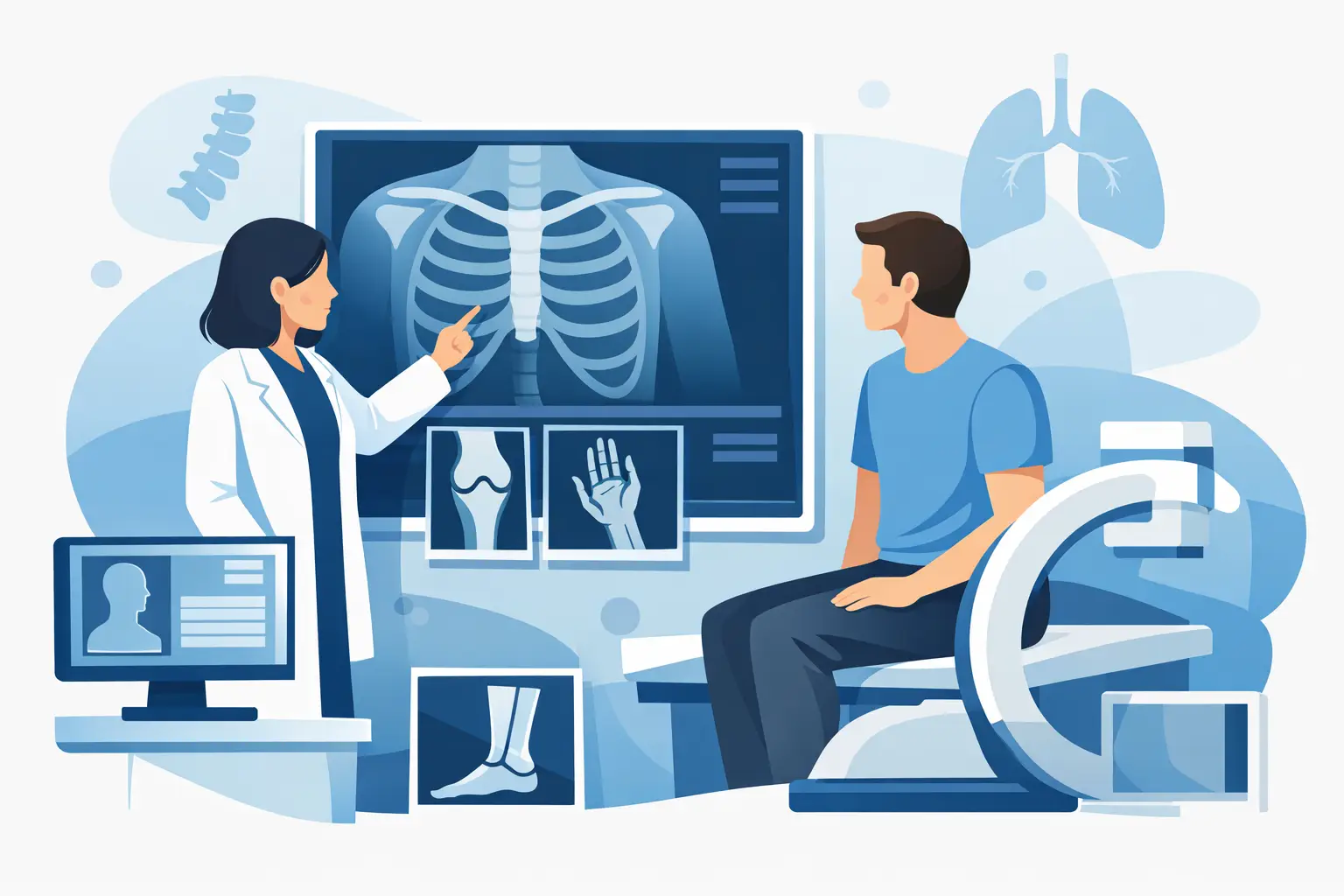
A swollen ankle after a missed step, a wrist that still hurts after a fall, or a rib injury that makes every deep breath uncomfortable can leave you with the same question: Do I need an X-ray? A digital x ray clinic gives you a practical way to get evaluated promptly without waiting days for a primary care appointment or making an unnecessary trip to the emergency room.
For many non-life-threatening injuries, on-site imaging helps the provider make informed next-step decisions during the same visit. At Express Care of Tampa Bay, patients can walk in for evaluation and digital X-rays at local Apollo Beach and Seffner clinics. No appointment needed.
What a Digital X Ray Clinic Does
A digital X-ray clinic combines a medical evaluation with imaging services in one location. Instead of visiting one office for an exam and another facility for imaging, you can be assessed by a provider and receive an X-ray when it is medically appropriate.
Digital X-rays use electronic imaging rather than traditional film. The images can be viewed quickly by the clinical team, helping them assess possible fractures, dislocations, and certain chest or joint concerns. That speed matters when you are trying to decide whether you can return to work, need a brace or splint, or should avoid putting weight on an injury.
An X-ray is not always the right test. Some injuries involving muscles, tendons, ligaments, or cartilage may not show clearly on an X-ray. Your provider may recommend follow-up care, repeat imaging, or evaluation by a specialist based on your symptoms and examination. The goal is not simply to take a picture – it is to match the right diagnostic step to the problem in front of you.
Common Reasons to Get an X-Ray
Many patients come in after an accident that seemed minor at first but became more painful over the next few hours. Others have a clear injury, such as a hard fall, collision, or sports impact. An urgent care provider can examine the affected area and determine whether an X-ray is appropriate.
Digital X-rays may be considered for concerns such as wrist, hand, finger, foot, ankle, arm, leg, or shoulder injuries. They can also help evaluate certain knee, hip, or rib complaints, as well as chest symptoms when a provider needs additional information. A child who fell off a bike, an adult who twisted an ankle at work, and an older adult with pain after a household fall may all benefit from prompt evaluation.
Pain alone does not always mean there is a fracture, and the location of pain can be misleading. Swelling, bruising, limited movement, tenderness over a bone, or difficulty bearing weight can all help guide the decision. That is why an in-person evaluation is valuable before imaging is performed.
Injuries That Should Not Wait
It is reasonable to seek same-day care when pain is worsening, swelling is significant, a joint looks out of place, or you cannot use the affected body part normally. Prompt care is also helpful when an injury is interfering with work, driving, school, sports, or everyday activities.
However, urgent care is not the right setting for every injury. Call 911 or go to the emergency room for severe bleeding, loss of consciousness, chest pain, trouble breathing, sudden weakness or numbness, a major head injury, an obviously deformed limb, or an injury following a serious vehicle crash. If you are unsure, choose the level of care that best protects your safety.
What to Expect During Your Visit
The visit begins with a conversation about what happened, where it hurts, and how your symptoms have changed. The provider will examine the injured area, checking for swelling, tenderness, range of motion, circulation, and sensation. This assessment helps determine whether imaging is needed and which views will provide the most useful information.
If an X-ray is ordered, a trained team member will position the area being examined and take the images. You may be asked to hold still or move into a few different positions. The process is typically quick, although the total visit time can vary based on the complexity of the injury and clinic volume.
After the images are reviewed, the provider will discuss the findings and recommended next steps. Depending on the concern, care may include rest instructions, activity restrictions, a splint, crutches, medication guidance, a work note, or referral for further evaluation. If a fracture or another condition requires specialized treatment, you will receive guidance on where to go next.
Why On-Site Digital Imaging Matters
When you are injured, convenience is more than a nice extra. It can determine whether you get evaluated at all. A clinic that can provide an exam and digital X-ray in the same visit may save you from traveling between multiple offices while you are in pain.
For parents, this can mean getting a child assessed after a school or weekend sports injury without waiting for a weekday appointment. For workers, it can provide documentation and treatment direction after a minor workplace injury. For busy adults, it can offer a clearer answer before deciding whether to take time off, modify activity, or arrange follow-up care.
Digital imaging also supports faster communication within the care visit. The provider can use the images alongside the physical examination and your medical history to make a more complete plan. Still, fast does not mean rushed. The right plan depends on the injury, your symptoms, your age, and whether you have medical conditions that could affect healing.
Preparing for a Digital X-Ray Visit
You do not need to do much before a walk-in X-ray visit, but a few details can help your care team. Bring a photo ID, insurance information if applicable, and a list of medications you take. If the injury occurred at work, let the clinic know and bring any employer or workers’ compensation information you were given.
Wear clothing that allows access to the injured area when possible. You may need to remove jewelry, watches, belts, or other metal items before imaging. Tell the provider if you are pregnant or think you could be pregnant. They will consider this information when determining the safest and most appropriate imaging plan.
It also helps to describe the injury clearly. Share when it happened, whether you heard a pop or crack, whether you were able to keep using the area afterward, and whether symptoms have improved or gotten worse. Those details can be just as useful as the image itself.
When Follow-Up Is Still Needed
A normal X-ray does not always mean an injury needs no further attention. Some fractures are difficult to see right away, particularly when swelling and pain are still developing. Soft tissue injuries may also need additional care even when bones appear normal.
Follow the instructions you receive, especially if you are told to limit activity, use a brace, or return for reevaluation. Seek prompt care again if pain becomes severe, swelling increases, numbness develops, fingers or toes become pale or cold, or you cannot manage symptoms at home.
For non-emergency injuries and concerns that may need imaging, walk in to Express Care of Tampa Bay for a prompt evaluation. Getting checked early can give you a clearer plan for today and help you protect your recovery tomorrow.