
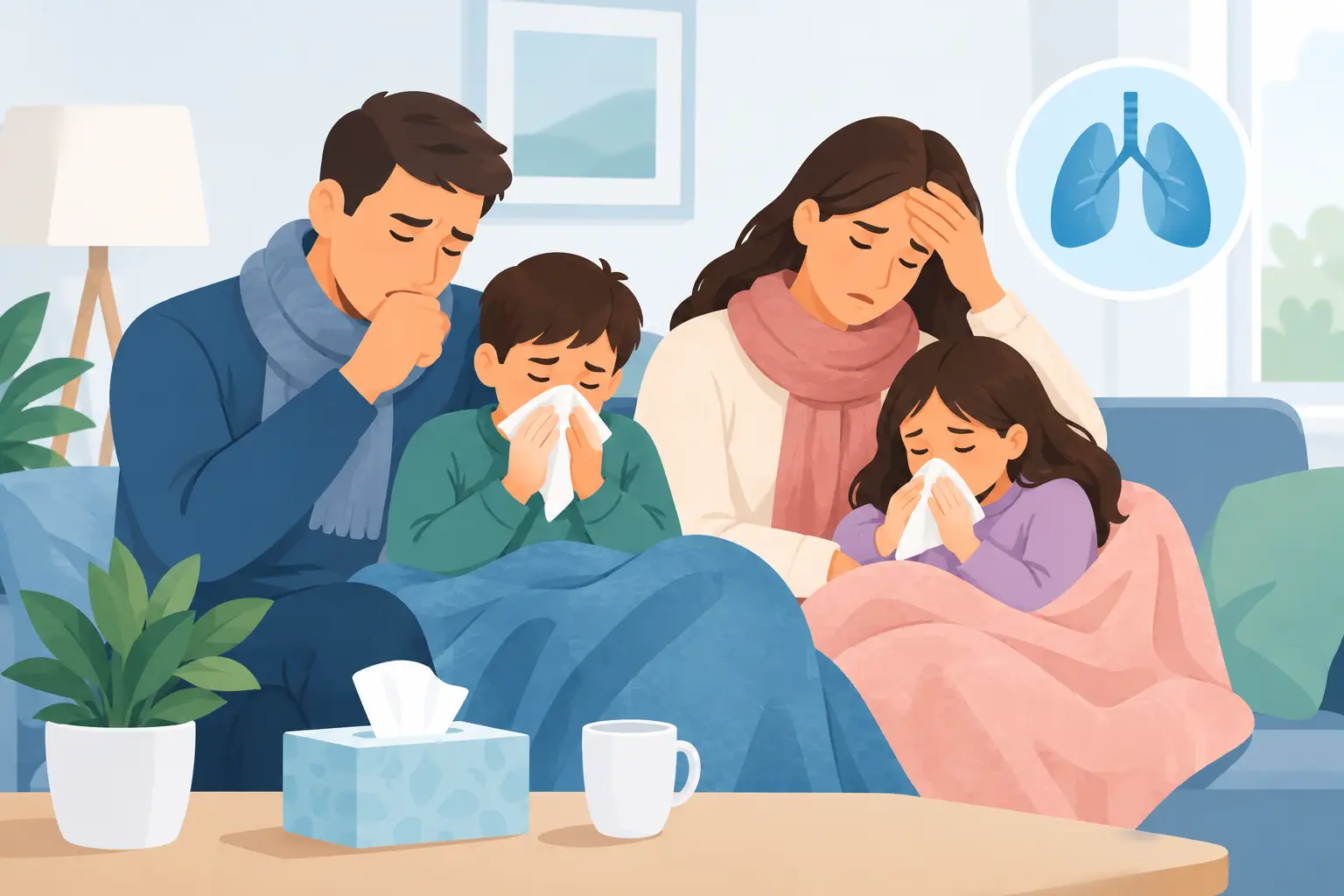
A cough that starts after a child brings home a classroom cold can feel routine. A cough that comes with shortness of breath, high fever, chest pain, or a rapid decline is different. This respiratory infection symptoms guide can help Tampa Bay families recognize what may be manageable at home, what needs same-day evaluation, and when emergency care is the safer choice.
Respiratory infections affect the nose, throat, airways, and lungs. They are common, especially during cold and flu season, but symptoms can overlap. A simple cold, influenza, COVID-19, bronchitis, strep throat, sinus infection, and pneumonia can begin with some of the same complaints. The goal is not to diagnose yourself. It is to notice changes in symptoms and get the right level of care without unnecessary delay.
Common respiratory infection symptoms
Many respiratory infections begin in the upper airways, causing symptoms such as a runny or stuffy nose, sneezing, scratchy throat, hoarseness, cough, and mild fatigue. Some people also develop a headache, body aches, fever, chills, or reduced appetite.
A cough can be dry, or it can bring up mucus. Mucus may be clear, white, yellow, or green. Color alone does not reliably tell you whether an infection is viral or bacterial. A changing cough, worsening fever, breathing difficulty, or symptoms that improve and then return can offer more useful clues that a medical evaluation is needed.
Lower respiratory infections can involve the bronchi or lungs. They may cause a deeper cough, chest tightness, wheezing, shortness of breath, pain with breathing or coughing, marked weakness, and fever. These symptoms deserve prompt attention, particularly for older adults, young children, pregnant patients, and people with asthma, COPD, heart disease, diabetes, or weakened immune systems.
What symptoms may point to common illnesses?
Symptoms often overlap, but their pattern can help a clinician decide which tests or treatment may be appropriate.
Common cold
Colds usually develop gradually. Nasal congestion, runny nose, sore throat, mild cough, and sneezing are typical. Fever is less common in adults but may occur in children. Most colds improve with rest, fluids, and symptom relief, although a persistent or worsening illness should be checked.
Flu
Influenza often arrives quickly. Fever, chills, body aches, headache, pronounced fatigue, and cough can make someone feel significantly ill within hours. Some patients also have sore throat, congestion, nausea, vomiting, or diarrhea. Flu treatment can be time-sensitive for certain patients, so same-day evaluation is a practical choice when symptoms began recently or are severe.
COVID-19
COVID-19 can cause congestion, sore throat, cough, fever, fatigue, headache, body aches, and changes in taste or smell. Symptoms range from mild to serious, and some people have no fever. Testing can help guide decisions about treatment, work or school, and protecting household members who may be at higher risk.
Bronchitis and pneumonia
Acute bronchitis often causes a persistent cough, sometimes with mucus, chest discomfort from coughing, fatigue, and mild fever. It is frequently viral, so antibiotics may not help. Pneumonia can cause more serious symptoms, including fever, chills, fast breathing, shortness of breath, chest pain, confusion, or unusual weakness. A clinician may recommend an exam, pulse oxygen check, lab testing, or a chest X-ray depending on your symptoms and health history.
Sinus or throat infections
Sinus pressure, facial pain, thick nasal drainage, headache, and congestion may accompany a sinus infection. Strep throat is more likely to cause sudden throat pain, fever, painful swallowing, and swollen neck glands than a cough or runny nose. Testing matters because treatment depends on the cause.
When to seek same-day urgent care
You do not need to wait until symptoms become unbearable to seek help. Same-day care can be appropriate for a fever that persists or returns, a cough that is getting worse, painful swallowing, wheezing, sinus pain that does not improve, ear pain, dehydration, or symptoms that interfere with work, school, sleep, or normal activity.
It is also wise to be evaluated when respiratory symptoms last longer than expected. A cold may improve over about a week, although coughs can linger. If you feel better and then suddenly worsen, develop a new fever, or begin having more difficulty breathing, contact a medical provider. That pattern can sometimes signal a secondary infection or another issue that needs treatment.
For children, parents should pay attention to behavior as much as temperature. A child who is unusually sleepy, inconsolable, refusing fluids, breathing faster than normal, or working hard to breathe should be assessed promptly. Infants, especially those younger than 3 months with a fever, need timely medical guidance.
At Express Care of Tampa Bay, walk-ins are welcome for many non-emergency respiratory concerns. A clinician can evaluate symptoms, perform available testing, check oxygen levels, and determine whether treatment, monitoring, or further imaging is appropriate. Same-day telehealth may be a convenient option for selected mild symptoms, but an in-person visit is usually better when breathing problems, chest symptoms, or a detailed exam are needed.
When respiratory symptoms are an emergency
Call 911 or go to the emergency room for severe trouble breathing, blue or gray lips or face, persistent chest pain or pressure, fainting, new confusion, inability to stay awake, coughing up significant blood, or signs of a severe allergic reaction such as swelling of the lips, tongue, or throat.
For adults, a concerning change in mental status, severe weakness, or inability to keep fluids down can also require emergency evaluation. For children, seek emergency help for ribs pulling in with breaths, grunting, pauses in breathing, bluish coloring, severe dehydration, or a child who is difficult to wake.
Urgent care is designed for non-life-threatening illnesses. If you are unsure whether breathing symptoms are an emergency, choose the safer option and seek emergency help.
What to do while you monitor symptoms
Rest and hydration support recovery from many viral respiratory illnesses. Water, broth, oral rehydration drinks, and warm liquids can be helpful, particularly when fever or sore throat makes it harder to drink enough. A cool-mist humidifier, saline nasal spray, and honey for cough in adults and children older than 1 year may provide relief.
Over-the-counter fever and pain medicines may help when used as directed and when safe for the individual. Read labels carefully, especially with combination cold and flu products. Taking more than one product containing acetaminophen can lead to an accidental overdose. Young children should only receive medicines recommended for their age and weight, and aspirin should not be given to children or teens with viral symptoms unless a clinician specifically directs it.
Avoid smoking and vaping while you are sick. Both can irritate the airways and make coughing, wheezing, and chest tightness worse. If you have asthma or COPD, follow your existing action plan and do not wait to seek care if your rescue medication is not providing the usual relief.
Why testing and an exam can make a difference
Antibiotics do not treat viral infections such as most colds, flu, COVID-19, and many cases of bronchitis. Using them when they are not needed can cause side effects and contribute to antibiotic resistance. On the other hand, some bacterial infections, including strep throat and certain cases of pneumonia, may require prescription treatment.
That is why symptoms alone are not always enough. A medical exam can identify throat swelling, abnormal lung sounds, ear infection, dehydration, or low oxygen levels. Rapid testing, lab work, and digital X-rays may be used when clinically appropriate to provide clearer answers and a treatment plan that matches the illness.
Respiratory symptoms can change quickly, especially in children, older adults, and people with chronic health conditions. Trust what you are seeing: if breathing becomes harder, fever returns, or your family member simply seems much sicker than expected, getting checked the same day can provide reassurance and timely care.