
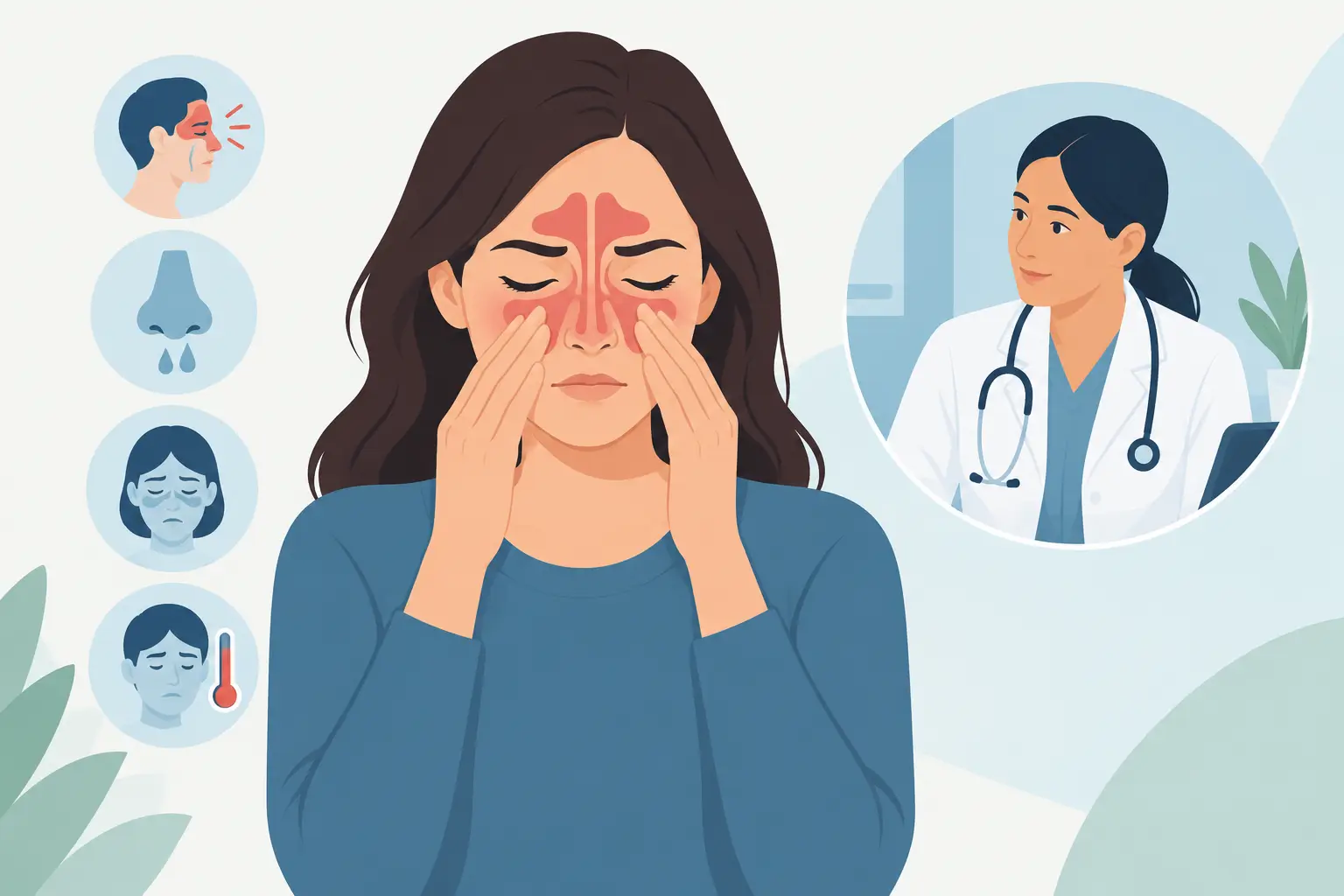
A sinus infection can make an ordinary cold feel like it is overstaying its welcome. You may have facial pressure, a blocked nose, thick drainage, a headache, or a cough that gets worse at night. While many sinus symptoms improve with time and home care, some need prompt medical evaluation – especially when symptoms are severe, worsening, or not improving after more than a week.
What Is a Sinus Infection?
Your sinuses are air-filled spaces behind the forehead, cheeks, eyes, and nose. When the lining of these spaces becomes swollen, mucus cannot drain normally. That congestion can cause pressure, pain, and a heavy, stuffed-up feeling in your face.
Most sinus infections begin after a cold or another viral respiratory illness. Viruses are the most common cause, which means antibiotics do not help in many cases. Allergies, smoke exposure, nasal polyps, and structural issues inside the nose can also contribute to sinus inflammation and repeated symptoms.
A bacterial infection is less common, but it can develop when symptoms last longer than expected or become worse after initial improvement. The goal of a medical visit is not simply to get an antibiotic. It is to determine what is most likely causing your symptoms and choose treatment that fits your situation.
Common Sinus Infection Symptoms
Sinus symptoms can vary by person and by which sinus areas are affected. Common signs include nasal congestion, thick yellow or green mucus, postnasal drip, facial pressure, and reduced sense of smell or taste. Some people also develop a cough, sore throat, fatigue, ear pressure, upper tooth discomfort, or bad breath.
The color of nasal mucus alone does not confirm a bacterial infection. A cold can cause yellow or green drainage as your body responds to inflammation. The pattern and duration of symptoms are usually more useful than mucus color when deciding whether additional treatment may be needed.
Facial pressure often gets worse when bending forward. Pressure around the cheeks may suggest maxillary sinus involvement, while forehead pain may be more noticeable with frontal sinus inflammation. These symptoms can be uncomfortable, but they should be evaluated in context because migraines, allergies, dental problems, and other conditions can feel similar.
When symptoms may point to a bacterial infection
A clinician may be more concerned about bacterial sinusitis when symptoms continue for 10 days or longer without improvement. Another warning pattern is feeling better after a cold and then getting noticeably worse again, often with increased drainage, fever, or facial pain.
Severe symptoms early in the illness can also matter. A high fever around 102 degrees Fahrenheit or higher, along with significant facial pain and thick nasal discharge for several consecutive days, may require evaluation. Children, older adults, and people with weakened immune systems may need care sooner because complications can be more likely or symptoms can be harder to interpret.
What You Can Do at Home
For mild sinus symptoms, supportive care can make a real difference while your body recovers. Rest, fluids, and time are often the foundation of treatment for a virus-related illness. Drinking enough water can help thin mucus, while a humidifier or warm shower may ease nasal dryness and congestion.
Saline nasal sprays or rinses can help clear mucus and reduce irritation. If you use a sinus rinse device, use only distilled, sterile, or properly boiled and cooled water. Keep the device clean between uses.
Over-the-counter pain relievers may help with facial discomfort, headache, or fever when used as directed. A nasal steroid spray may be useful for some people, particularly if allergies contribute to swelling. Decongestants can provide short-term relief, but they are not right for everyone. Ask a clinician or pharmacist before using them if you have high blood pressure, heart disease, glaucoma, thyroid disease, prostate concerns, or take certain medications.
Be careful with medicated nasal decongestant sprays. Using these sprays for more than three days can cause rebound congestion, leaving your nose feeling even more blocked once you stop. Combination cold medicines also deserve a second look, since it is easy to accidentally take duplicate ingredients.
When to Visit Urgent Care for a Sinus Infection
Same-day care is a good option when sinus symptoms are disrupting work, sleep, school, or family life and are not improving as expected. A clinician can review your symptoms, examine your ears, nose, throat, and lungs, and assess whether allergies, a viral illness, bacterial sinusitis, or another condition may be involved.
You should consider prompt evaluation if symptoms last more than 10 days, worsen after starting to improve, or include significant facial pain, a persistent fever, or symptoms that keep returning. Care is also appropriate if you have asthma, chronic lung disease, immune suppression, frequent sinus infections, or a history of sinus surgery.
Antibiotics may be considered when a bacterial infection is likely. When they are prescribed, take them exactly as directed and complete the course unless your clinician tells you otherwise. Antibiotics can cause side effects and do not treat viral infections, so using them only when needed helps protect both your health and the effectiveness of these medications.
At Express Care of Tampa Bay, walk-ins are welcome for non-emergency sinus, cold, flu, and respiratory symptoms. Patients can be evaluated in person at the Apollo Beach or Seffner location, with same-day telehealth visits also available when a virtual evaluation is appropriate. No appointment is needed when you need answers quickly.
When Sinus Symptoms Need Emergency Care
Most sinus infections are not emergencies, but a few symptoms require immediate attention. Go to an emergency department or call 911 for trouble breathing, chest pain, fainting, confusion, severe weakness, or signs of a serious allergic reaction such as swelling of the lips, tongue, or throat.
Seek emergency evaluation for swelling or redness around an eye, eye pain, vision changes, difficulty moving an eye, a severe or unusual headache, stiff neck, confusion, or persistent vomiting. These symptoms are uncommon, but sinus infections near the eyes or brain can occasionally lead to serious complications. Do not wait for symptoms to pass if they are severe or rapidly worsening.
Parents should also seek prompt care for a child who is unusually sleepy, difficult to wake, dehydrated, breathing rapidly, or showing signs of eye swelling. For infants and very young children, fever and respiratory symptoms can require a lower threshold for medical evaluation.
Could It Be Allergies, a Cold, or Something Else?
Allergies often cause sneezing, itchy eyes, clear drainage, and symptoms that come and go with pollen, dust, pets, or other triggers. A cold is more likely to include sore throat, body aches, and a gradual improvement over several days. Sinus symptoms may occur with either condition.
Tooth pain deserves attention as well. An infected upper tooth can sometimes cause pain that feels like a sinus problem, and dental care may be needed instead. Similarly, a persistent headache with little congestion may point to a cause other than sinusitis.
If you are unsure what is driving your symptoms, a prompt evaluation can help you avoid guessing. The right next step may be home care, allergy treatment, a prescription, testing for another respiratory illness, or follow-up with your primary care provider. Getting clear guidance early can help you feel better and get back to your normal routine.