
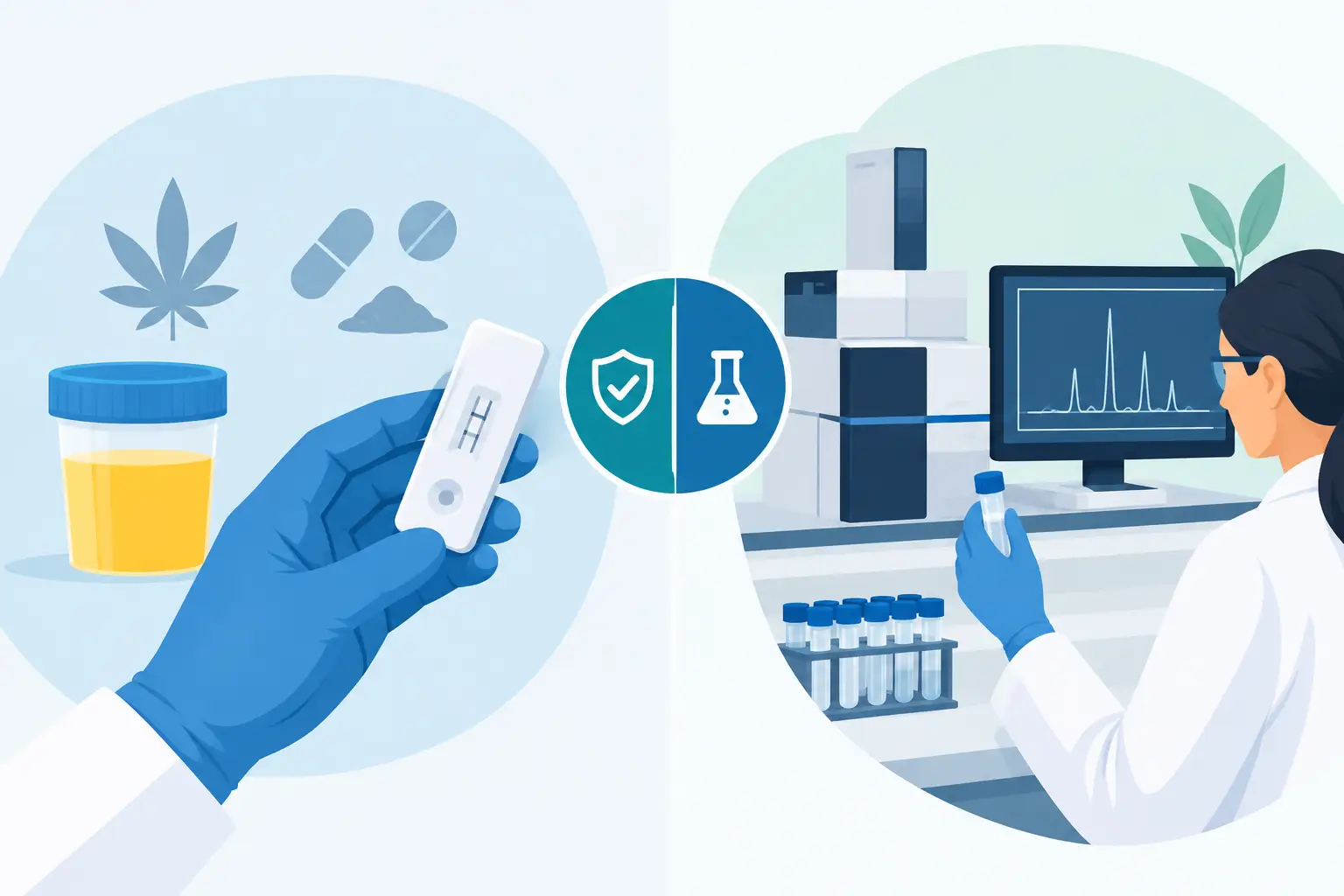
A pre-employment form may ask for a drug test, while the collection site may describe the service as a drug screen. That wording can feel interchangeable, but drug screening versus drug testing can involve different steps, different levels of certainty, and different decisions for an employer, employee, or applicant.
For most people, the practical question is simple: What will happen at the appointment, and what does the result mean? Understanding the process helps reduce unnecessary worry, especially when a job offer, DOT requirement, workplace policy, or medical review is involved.
Drug Screening Versus Drug Testing: The Main Difference
A drug screening is generally an initial check for one or more substances. It is designed to identify samples that may need a closer look. Screening methods can provide results quickly, particularly when a point-of-care urine screen is used, but an initial positive result is usually considered presumptive rather than final.
Drug testing is the broader term. It may refer to the entire process, from specimen collection and screening through laboratory analysis, medical review, and reporting. It can also refer specifically to a more detailed laboratory test that confirms or rules out an initial screening result.
In everyday conversation, employers and patients often use the terms the same way. The distinction matters most when a result could affect hiring, a safety-sensitive job, legal compliance, or an employee’s work status. In those situations, a screening result alone may not tell the whole story.
Why an Initial Screen May Need Confirmation
Many screening tests are built to catch possible substance use efficiently. That sensitivity is useful, but it can occasionally produce a result that needs further evaluation. Certain prescription medicines, over-the-counter products, supplements, or testing limitations can affect an initial result.
A confirmation test uses more specific laboratory methods to identify the substance present and, when applicable, measure it against established cutoff levels. This additional step helps distinguish a true positive from a result that should not be reported as positive.
For federally regulated testing programs, including many DOT testing situations, the process has defined collection, chain-of-custody, laboratory, and medical review requirements. A Medical Review Officer, or MRO, may contact the donor to discuss a verified prescription before a final result is reported to the employer. A valid prescription does not always resolve every workplace issue, particularly in safety-sensitive roles, but it can be relevant to the medical review process.
What Happens During a Workplace Drug Screen
The exact process depends on the employer’s policy, the reason for testing, and any industry rules. A collection appointment is usually straightforward. The person being tested brings a government-issued photo ID, completes the required paperwork, and provides the requested specimen.
Urine is commonly used for workplace drug screening because it is widely accepted and can be collected efficiently. Some programs use oral fluid, hair, or blood testing instead. Each method has different detection windows, collection procedures, costs, and policy considerations. There is no single specimen type that is best for every purpose.
For a regulated or employer-directed test, the collector follows chain-of-custody procedures. This documents how the specimen is handled from collection through delivery to the laboratory. The process protects the integrity of the sample and supports reliable reporting.
A rapid screen may be available soon after collection, depending on the test ordered. Laboratory testing generally takes longer because the sample must be processed and, if needed, confirmed. Employers should avoid treating a preliminary result as a final employment decision when their policy or testing program requires laboratory confirmation and MRO review.
Common Reasons People Need Drug Testing
Drug testing is not limited to job applications. Local employers may request testing for several workplace needs, including pre-employment, random, reasonable suspicion, post-accident, return-to-duty, and follow-up testing. The reason for the test affects the paperwork, timing, and reporting process.
Pre-employment testing is often completed after a conditional job offer. Random testing may be required for employees in safety-sensitive positions. Post-accident testing may be requested after a workplace incident, although a test result alone does not establish the cause of an accident or prove impairment at a particular time.
DOT testing is separate from a standard company drug screen. Drivers and other covered transportation workers must follow federal program requirements. Employers and employees should use a collection site that understands the required forms, specimen procedures, and reporting process for the applicable program.
Some individuals also seek testing for personal, medical, or legal reasons. The right test depends on who needs the results and how those results will be used. A personal test may not meet an employer’s chain-of-custody requirements, and an employer-directed test may not be appropriate for a legal matter. Asking before the appointment can prevent a repeat visit.
What Employers Should Clarify Before Sending Someone for Testing
A clear testing policy protects both the business and its workers. Before directing an applicant or employee to a collection site, employers should identify the purpose of the test, the panel requested, the specimen type, and whether the program requires a laboratory-based test or a rapid screen.
They should also confirm who receives the results and what happens if the screen is non-negative. Privacy matters. Drug-testing information should be handled according to company policy, applicable laws, and the requirements of the testing program. Supervisors do not need more medical information than is necessary to make an appropriate employment decision.
Consistency is equally important. Similar circumstances should be handled through the same written process whenever possible. An employer’s policy should explain when testing may occur, whether confirmation is used, how results are reviewed, and how employees can raise questions. For DOT-covered roles, the employer must follow the applicable federal rules rather than relying only on a general workplace policy.
What Employees and Applicants Can Do Before Their Appointment
Arrive with the identification and paperwork requested by the employer. If the testing program uses a chain-of-custody form, make sure the name and employer information are accurate before collection begins. Plan enough time for check-in and the collection process, especially when the test is tied to a same-day work requirement.
Do not try to alter, dilute, substitute, or interfere with a specimen. These actions can lead to an invalid, adulterated, substituted, or refused test result under an employer’s policy or a regulated program. Follow collection instructions and ask the collector if something is unclear.
If you take prescription medication, do not stop it simply because you have a drug test scheduled. Take medication only as directed by your prescribing clinician. If a laboratory result requires medical review, the MRO may ask for information that verifies a legitimate prescription. Bring relevant prescription details if your employer or testing provider instructs you to do so, but remember that collection staff may not be responsible for interpreting medications or deciding the final result.
Hydration is reasonable, but excessive fluid intake is not helpful and may create a dilute specimen. Avoid trying to prepare for a test with detox products or internet remedies. These products are not a reliable way to change results and may complicate the testing process.
Choosing the Right Local Testing Service
For employers, speed matters, but accuracy and proper documentation matter just as much. A convenient urgent care clinic can help reduce time away from work when it offers occupational health services alongside drug screening, physicals, and injury care. Before sending a worker over, confirm walk-in availability, accepted testing programs, required forms, and whether an appointment is needed for your specific service.
For workers and applicants, choose the location named by the employer whenever one is provided. If you need a local collection site for an employer-directed screen, Express Care of Tampa Bay offers accessible occupational health support for Tampa Bay workers, job candidates, and employers. Walk-ins are welcome, and calling ahead can help confirm the paperwork and testing requirements for your visit.
A Result Is Information, Not the Whole Story
A drug test can be an important workplace safety tool, but it has limits. A positive laboratory result may show the presence of a substance or metabolite within the test’s detection window. It does not automatically establish when a substance was used, the amount used, or whether a person was impaired at work. Those questions require context and should be addressed through the appropriate workplace, medical, or regulatory process.
If you are an employer, set expectations before testing begins. If you are a worker or applicant, follow the instructions, bring the right documents, and ask questions early. A clear process makes a required drug screen one more task you can complete promptly and confidently.