
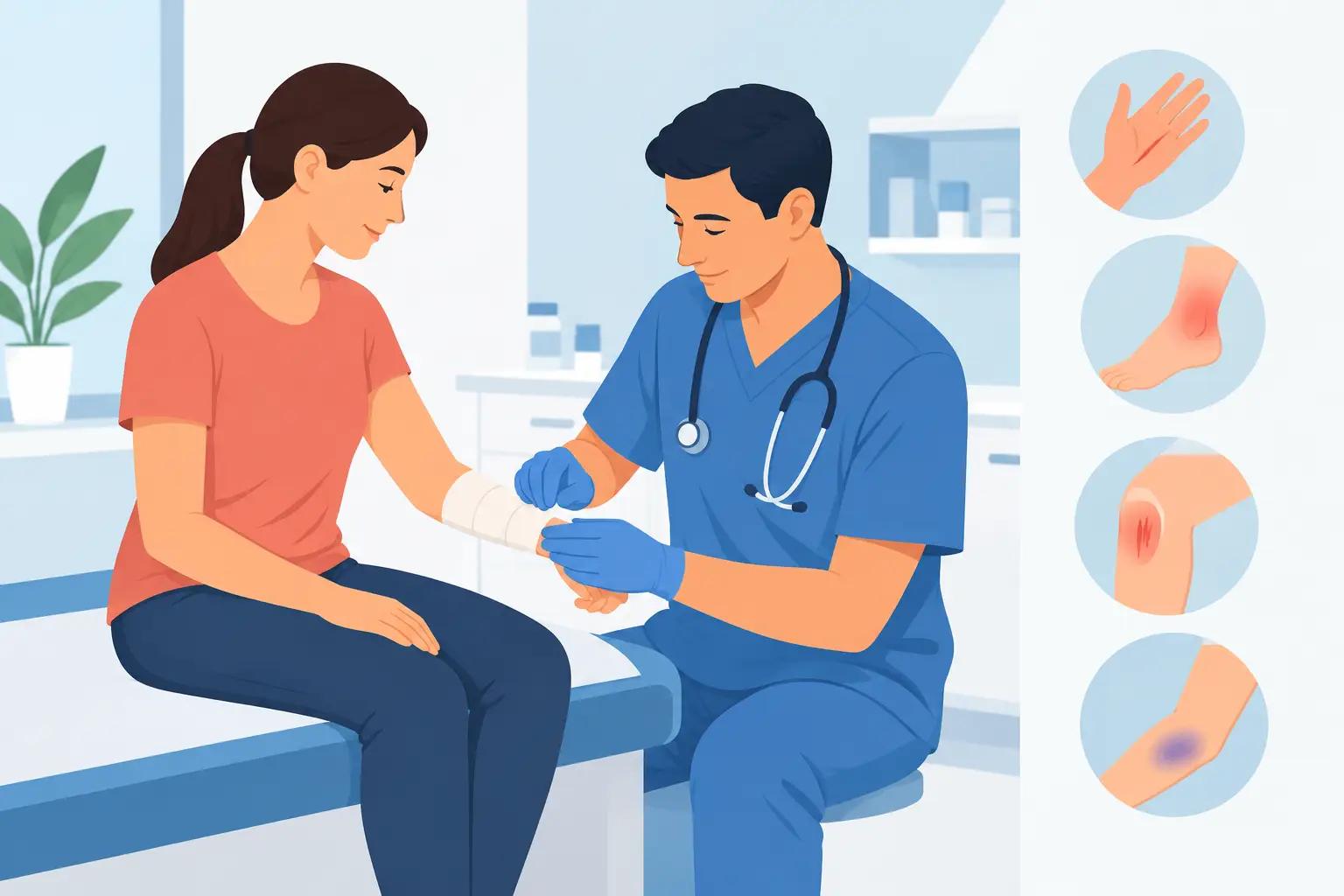
A kitchen knife slips while making dinner. Your child twists an ankle at practice. You touch a hot pan or catch your hand in a closing car door. These moments are common, but deciding what to do next is not always simple. Prompt minor injury care can help relieve pain, protect against infection, and identify problems that may need more than rest and a bandage.
For many non-life-threatening injuries, urgent care offers a practical middle ground between home treatment and an emergency room visit. You can walk in for an evaluation, receive treatment, and get clear instructions for recovery without waiting days for a primary care appointment.
What Counts as a Minor Injury?
A minor injury is generally one that causes pain, swelling, bleeding, or limited movement but does not appear immediately life-threatening. The word “minor” can be misleading, though. A small cut may still need stitches. What feels like a simple sprain may be a fracture. The goal is not to diagnose yourself perfectly. It is to recognize when an injury deserves a medical evaluation.
Urgent care can commonly evaluate and treat cuts, scrapes, puncture wounds, mild burns, bruises, suspected sprains, strains, minor fractures, work-related injuries, and sports injuries. On-site digital X-rays can be especially helpful when pain, swelling, or trouble using a hand, foot, wrist, or ankle raises concern for a broken bone.
A same-day visit is also useful when an injury is getting worse instead of better. Increasing redness around a wound, drainage, warmth, fever, or pain that becomes more severe can signal infection or another complication that should not be ignored.
When Home Care May Be Enough
Some injuries can be safely managed at home when symptoms are mild and improving. A superficial scrape, small bruise, or mild muscle soreness may respond well to basic first aid, rest, and observation.
For a small cut, wash your hands first, rinse the area with clean running water, gently remove visible debris, and cover it with a clean bandage. Avoid repeatedly using hydrogen peroxide or rubbing alcohol inside the wound, as these products can irritate healthy tissue and delay healing. Change the bandage when it becomes wet or dirty.
For a mild sprain or strain, resting the affected area and using a cold pack wrapped in a cloth for short periods can help limit discomfort and swelling. Compression and elevation may also help when appropriate. Do not apply ice directly to skin, and do not push through pain to return to work, sports, or exercise too quickly.
Home care makes the most sense when you can move the area normally, pain is manageable, bleeding stops with direct pressure, and symptoms improve over the next day or two. If any of those conditions change, it is reasonable to seek care.
Signs You Should Get Same-Day Minor Injury Care
Do not wait for a routine appointment if an injury needs attention now but does not appear to be an emergency. Urgent care is a good option for many situations where you need an exam, wound treatment, imaging, or guidance about returning to normal activity.
Consider a same-day visit when a cut has edges that separate, keeps bleeding after firm direct pressure, is deep, was caused by a dirty object, or is on the face, hand, joint, or genital area. Wounds from animal bites, human bites, rusty or contaminated objects, and punctures can require special treatment. A clinician can clean the wound, assess the risk of infection, determine whether closure is appropriate, and review whether a tetanus booster may be needed.
An ankle, wrist, finger, or foot injury should also be evaluated if there is significant swelling, bruising, deformity, numbness, weakness, or trouble bearing weight or using the affected area. You do not need to be certain that a bone is broken before coming in. An exam and digital X-ray can help distinguish a fracture from a sprain or strain and guide the right next step.
Minor burns deserve care when they blister, cover a large area, involve the face, hands, feet, genitals, or a major joint, or result from chemicals or electricity. Burns can look less serious at first than they truly are, particularly in children and older adults.
When an Injury Needs Emergency Care
Urgent care is designed for non-life-threatening conditions. Call 911 or go to the emergency room for severe or uncontrolled bleeding, loss of consciousness, confusion, seizure, chest pain, trouble breathing, severe head injury, a visible bone, a badly deformed limb, sudden weakness, or signs of a stroke.
Emergency care is also the right choice for a deep wound with heavy bleeding, an injury involving the eye, or a serious burn with charred, white, leathery, or numb skin. If you are unsure whether symptoms are serious enough for the ER, choose the safer option. Fast emergency evaluation matters when there is a risk to life, limb, vision, or brain function.
What Happens During an Urgent Care Visit?
At an urgent care visit, the clinician will ask how the injury happened, when it occurred, and what symptoms you have noticed. Details matter. Let the care team know if the wound was dirty, whether you fell or hit your head, if you have numbness or tingling, and whether you take blood thinners or have conditions such as diabetes, poor circulation, or a weakened immune system.
The evaluation may include checking range of motion, sensation, circulation, swelling, and tenderness. If a fracture is possible, an X-ray may be recommended. For cuts and wounds, treatment may include cleaning, removing debris, applying a dressing, closing the wound when appropriate, and discussing infection prevention.
The best treatment depends on the injury, your health history, and the timing. For example, some wounds can be closed safely soon after they happen, while older or contaminated wounds may need a different approach. A clinician can explain the trade-offs and give you instructions based on what they see rather than a one-size-fits-all rule.
Care After You Leave the Clinic
Recovery often depends on what happens after the initial visit. Follow instructions for wound cleaning, bandage changes, medication, activity limits, and follow-up. If you receive a brace, splint, or wrap, use it as directed. Returning to strenuous activity before an injury heals can turn a short recovery into a longer one.
Watch for warning signs such as worsening pain, spreading redness, swelling that increases, pus or drainage, fever, numbness, blue or pale fingers or toes, or new difficulty moving the injured area. These changes may mean you need to be seen again.
For workers, prompt documentation can also matter after an on-the-job injury. Reporting the incident according to your employer’s process and seeking timely evaluation can support appropriate treatment and a safer return-to-work plan.
Convenient Care for Everyday Injuries
When a non-emergency injury disrupts your day, waiting it out is not always the easiest or safest choice. Express Care of Tampa Bay provides walk-in evaluation for many minor injuries, with on-site digital X-rays available when imaging is needed. No appointment is needed, and care is available seven days a week for patients near Apollo Beach and Seffner.
Whether the injury happened at home, at work, on the field, or while running errands, getting checked promptly can replace uncertainty with a clear plan. If pain, bleeding, swelling, or limited movement is keeping you from getting back to your routine, walk in for an evaluation and get the support you need.