
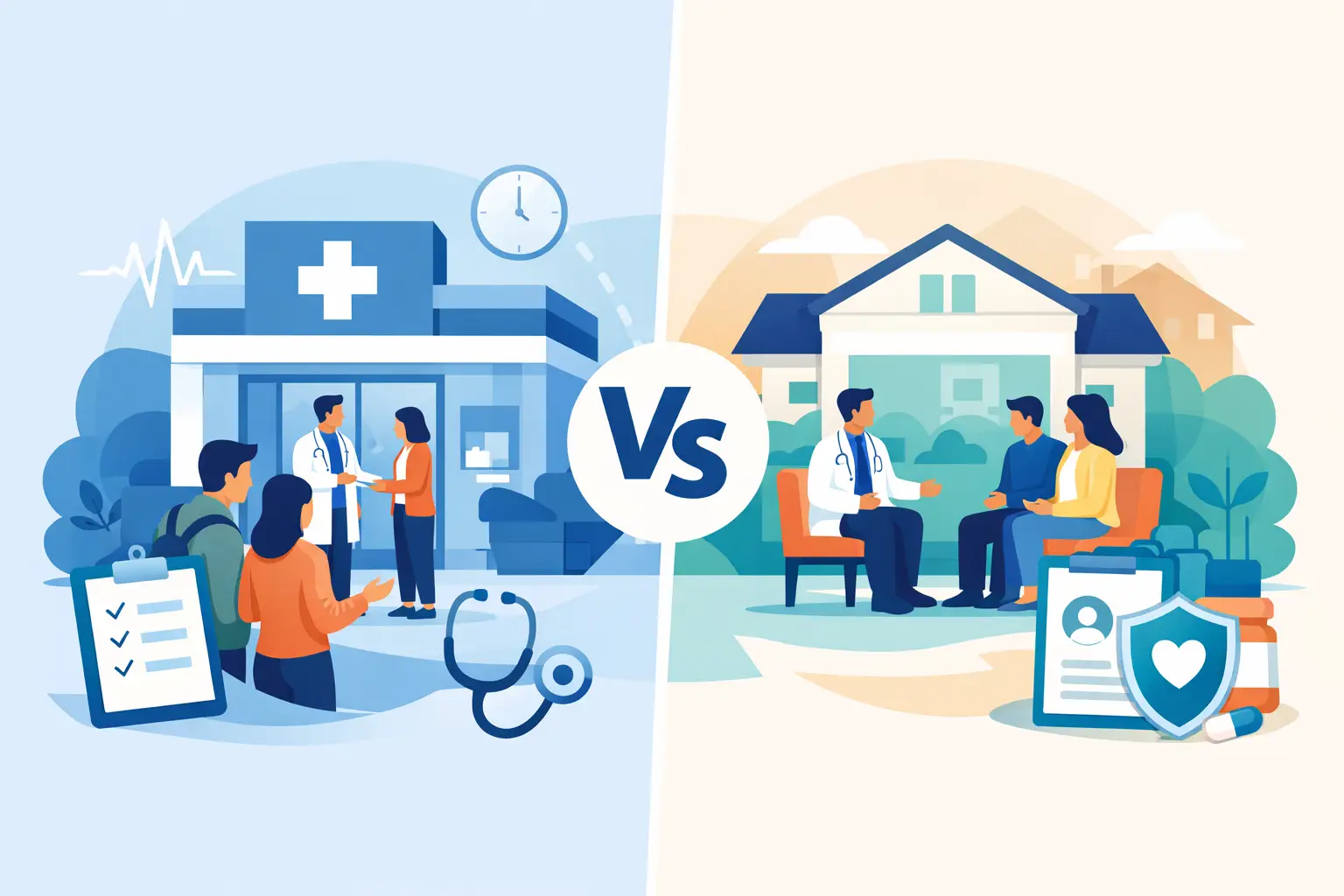
A sore throat that started yesterday, a child with an earache on Saturday morning, or a work physical needed before Monday can make the choice feel urgent. When comparing walk in versus primary care, the right option depends on how quickly you need help, what kind of care you need, and whether the issue calls for ongoing follow-up.
Both settings play an important role in keeping Tampa Bay families healthy. A walk-in clinic is built for prompt evaluation of non-emergency concerns. A primary care provider is your long-term health partner for preventive care, chronic conditions, and medical decisions that benefit from knowing your full history.
Walk-In Versus Primary Care at a Glance
Walk-in care is often the practical choice when a new illness or minor injury cannot wait for the next available appointment. You can come in for an evaluation without scheduling weeks ahead, receive testing when appropriate, and leave with a treatment plan for many common concerns.
Primary care is usually the better fit when you need routine checkups, ongoing medication management, referrals, or support for a chronic health condition. Your primary care provider can track patterns over time, review your medical records, and help coordinate care with specialists.
The decision is not about one type of care being better than the other. It is about getting the right level of care at the right time.
When Walk-In Care Makes Sense
Walk-in care is designed for medical needs that are important but not life-threatening. If you are uncomfortable, worried, or need an answer today, prompt evaluation can help you avoid waiting and get clear next steps.
Many patients choose walk-in care for cold and flu symptoms, sore throats, sinus pressure, ear pain, coughs, fever, nausea, vomiting, diarrhea, urinary tract infection symptoms, rashes, and minor allergic reactions. It can also be appropriate for minor cuts, sprains, strains, simple fractures, and other injuries that need attention but do not require an emergency room.
For these concerns, convenience matters. A clinic with on-site digital X-rays, lab testing, and blood work may be able to evaluate the problem in one visit rather than sending you elsewhere for basic diagnostics. That can be especially helpful when symptoms start after your doctor’s office is closed or when your schedule cannot accommodate a delayed appointment.
Walk-in care also serves needs that are not related to sudden illness. School and sports physicals, pre-employment physicals, drug screenings, DOT exams, Coast Guard physicals, diving physicals, immigration examinations, surgical clearances, and workers’ compensation care often have deadlines. Same-day access can keep a job, activity, or required paperwork from being delayed.
At Express Care of Tampa Bay, Walk-Ins Welcome means patients can seek care for eligible concerns without adding another scheduling hurdle to an already busy day.
Same-Day Care Does Not Mean Rushed Care
Fast access should still include a thoughtful evaluation. A clinician may ask about your symptoms, medications, allergies, medical history, and recent exposures. Depending on the concern, your visit may include a physical exam, rapid testing, blood work, imaging, or a prescription when medically appropriate.
The goal is to identify what can be safely treated in an outpatient setting and to recognize when additional care is needed. If a condition requires emergency treatment, specialty care, or follow-up with your regular physician, you should receive direction on the next step.
When Primary Care Is the Better Choice
Primary care works best when your health concern is ongoing, complex, or connected to your long-term wellness. Your regular provider can see the larger picture, not just the symptoms in front of you today.
For example, primary care is often the right setting for managing high blood pressure, diabetes, asthma, thyroid disease, high cholesterol, depression, anxiety, and other chronic conditions. It is also the best home for annual wellness visits, age-appropriate screenings, vaccine planning, and conversations about changes that have developed gradually.
If you have been experiencing fatigue for months, recurring headaches, unexplained weight changes, persistent digestive problems, or a medication that no longer seems effective, schedule with your primary care provider when possible. These issues may need a longer conversation, repeat visits, or coordination with a specialist.
Primary care is also valuable after a walk-in visit. A clinic can treat a new infection, evaluate an injury, or provide immediate testing, while your regular doctor can monitor recovery and address any related health concerns over time.
Continuity Can Change the Care Plan
A primary care provider may already know your past test results, family history, previous treatments, and health goals. That background can shape decisions about testing, medication, and referrals.
Still, not everyone has an established primary care provider, and appointments are not always available when symptoms begin. Walk-in care gives patients a local option for timely help while they arrange follow-up or establish ongoing care.
Consider the Timing, Symptoms, and Follow-Up You Need
A simple question can help: do you need care today, or do you need care that unfolds over time?
If you woke up with painful urination, developed a fever and sore throat, twisted an ankle, or need a required physical before work, a walk-in visit may be the most direct path. If you need to review months of blood pressure readings, adjust long-term medications, discuss preventive screenings, or investigate recurring symptoms, primary care is generally the better starting point.
There are also situations where both are appropriate. You might visit a walk-in clinic for immediate treatment of bronchitis symptoms, then see your primary care provider if the cough lingers or you have repeated respiratory infections. You may receive an X-ray and initial treatment for an injury, then follow up with your regular physician or an orthopedic specialist if healing does not go as expected.
For patients balancing work, school, caregiving, and transportation, telehealth can also be useful for select non-emergency concerns. A virtual visit may help you discuss symptoms and determine whether you need an in-person exam, testing, or imaging.
Know When to Choose the Emergency Room Instead
Neither walk-in care nor a routine primary care appointment is the right choice for a life-threatening emergency. Call 911 or go to the emergency room for chest pain, trouble breathing, signs of stroke, severe bleeding, loss of consciousness, seizures, a serious head injury, severe burns, major trauma, or sudden severe symptoms.
Trust your instincts. If you believe a condition could be life-threatening, do not wait for a clinic visit or try to manage it at home.
Make Your Visit More Useful
Whether you choose walk-in or primary care, bring a photo ID, insurance information if applicable, a list of medications, and details about your symptoms. Be ready to share when the problem started, what makes it better or worse, recent illnesses or injuries, and any allergies.
For occupational exams or physicals, bring the forms and documents required by your employer, school, agency, or licensing organization. Calling ahead can help confirm what you need to bring, especially for DOT, Coast Guard, immigration, or specialized physical requirements.
You do not have to choose one type of care forever. Use primary care to build a strong foundation for your health, and use walk-in care when a non-emergency concern needs prompt attention. When something changes and waiting is not practical, getting evaluated sooner can provide reassurance, treatment, and a clear plan for what comes next.