
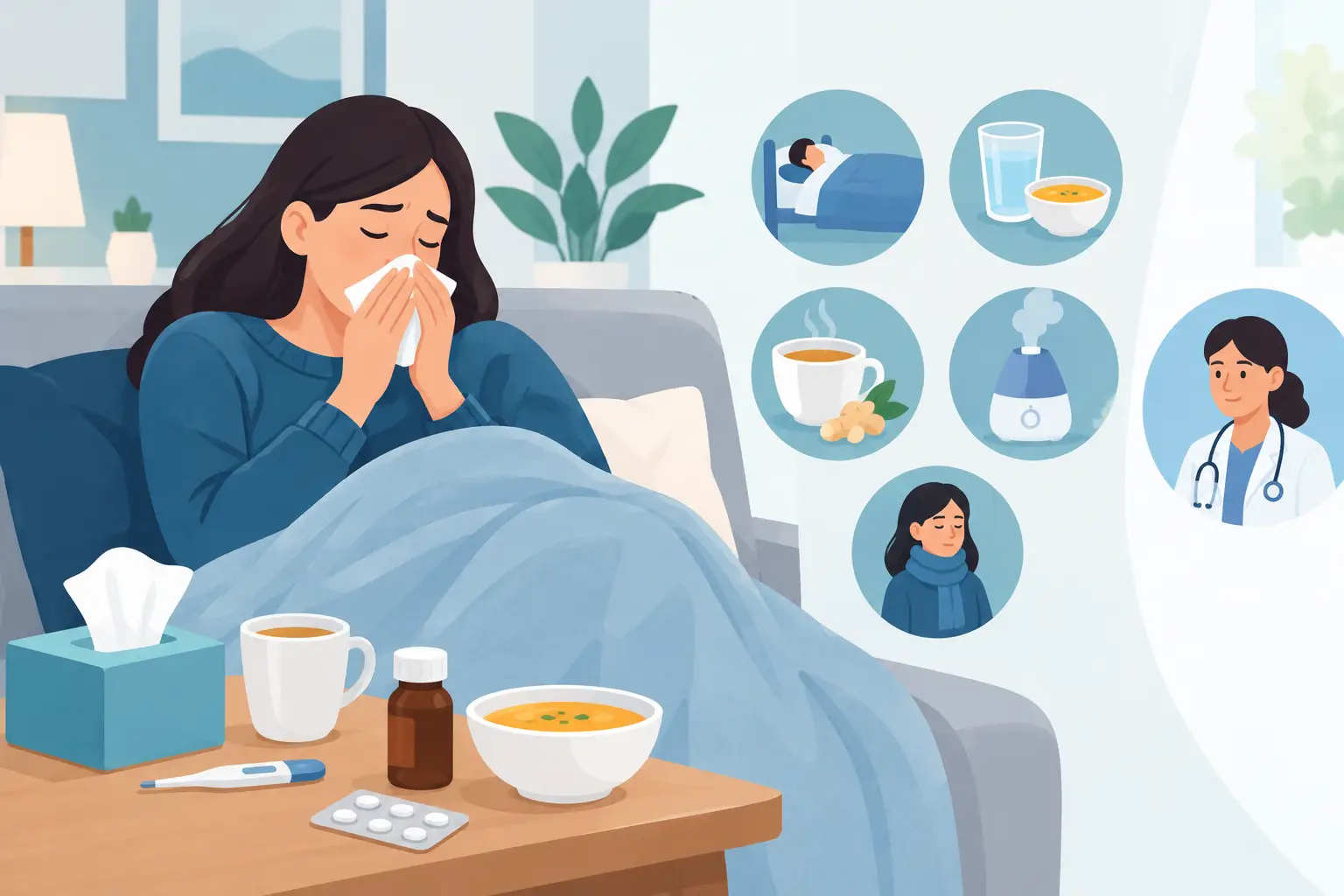
A fever that comes on quickly, body aches that make getting out of bed difficult, and sudden exhaustion can turn an ordinary day into a sick day fast. Knowing how to manage flu symptoms can help you feel more comfortable, protect people around you, and recognize when you need medical care rather than more time on the couch.
Influenza is more than a typical cold. Symptoms often arrive abruptly and may include fever or chills, cough, sore throat, headache, muscle aches, fatigue, and sometimes vomiting or diarrhea. Most otherwise healthy people improve with rest and supportive care, but the flu can become serious, especially for young children, older adults, pregnant people, and people with certain health conditions.
Start With Rest, Fluids, and a Simple Plan
Your body needs energy to fight an infection. Give it that energy by reducing your usual schedule, sleeping as much as you can, and avoiding strenuous work or exercise until you are recovering. Pushing through body aches and fever may leave you more depleted and can expose coworkers, classmates, and family members to the virus.
Hydration matters because fever, sweating, poor appetite, vomiting, and diarrhea can all cause fluid loss. Water is a good starting point, but broth, electrolyte drinks, decaffeinated tea, ice pops, and diluted juice can be easier to tolerate if your throat hurts or your stomach feels unsettled. Take small, frequent sips if drinking a full glass feels difficult.
A useful check is your urine color and frequency. Pale yellow urine usually suggests you are getting enough fluid. Very dark urine, very little urination, dizziness when standing, or a dry mouth can be signs that you need to drink more or be evaluated for dehydration.
Food can wait if your appetite is low for a day or two, but try to eat light, familiar foods as you are able. Soup, toast, crackers, bananas, rice, applesauce, yogurt, and eggs may be easier to manage than heavy or greasy meals. For children, keeping fluids down is generally more urgent than finishing a normal meal.
Relieve Fever, Aches, and Congestion Safely
Over-the-counter medicine can reduce discomfort, but it works best when you choose products carefully. Acetaminophen or ibuprofen may help lower fever and ease headache, sore throat pain, and body aches. Follow the label directions, consider your medical history, and do not take more than the recommended dose.
Avoid doubling up on ingredients. Many multi-symptom cold and flu products already contain acetaminophen, so taking one along with a separate acetaminophen product can lead to an unsafe total dose. If you take prescription medicines, have liver or kidney disease, have stomach ulcers, take blood thinners, or are unsure what is safe for you, ask a medical professional or pharmacist before choosing a product.
A few targeted comfort measures can make a meaningful difference:
- Use a cool-mist humidifier or take a warm shower to ease dry air and nasal irritation.
- Try saline nasal spray or drops for congestion, particularly if you want a non-medicated option.
- Soothe a sore throat with warm liquids, salt-water gargles, or throat lozenges for adults and older children who can use them safely.
- Use honey in warm tea or water for cough relief if the patient is older than 1 year. Honey should never be given to infants.
Do not give aspirin to children or teenagers with flu-like illness unless a clinician specifically instructs you to do so. Aspirin is associated with a rare but serious condition called Reye’s syndrome in children and teens with viral illnesses.
Stay Home Until You Are Less Likely to Spread the Flu
Flu viruses spread easily through coughs, sneezes, and close contact. Staying home while you have a fever and feel acutely ill protects the people around you, including infants, older relatives, and coworkers with medical conditions. In general, wait until you have been fever-free for at least 24 hours without fever-reducing medication and your symptoms are improving before returning to regular activities. Some settings, including workplaces and schools, may have their own policies.
When you must be around others, wear a well-fitting mask if possible, cover coughs and sneezes, wash your hands often, and avoid sharing cups, utensils, towels, or food. Clean frequently touched surfaces such as phones, doorknobs, remotes, and bathroom fixtures. These steps are practical, not perfect, but they can reduce the chance of passing the illness through your household.
Ask About Antiviral Treatment Early
For some patients, prescription antiviral medication can shorten the illness and lower the risk of certain complications. These medicines work best when started early, often within the first 48 hours after symptoms begin. That is why timing matters if you develop sudden flu symptoms, particularly during flu season.
Contact a healthcare provider promptly if you are pregnant, age 65 or older, have asthma, diabetes, heart disease, chronic lung disease, kidney disease, a weakened immune system, or another condition that increases your risk. Young children may also need an earlier evaluation. A clinician can determine whether your symptoms fit the flu, whether testing would help, and whether antiviral treatment is appropriate for you.
Antivirals are not right for every patient, and they are not a replacement for rest, fluids, and symptom relief. Still, waiting several days to seek advice can mean missing the window when they may offer the most benefit.
When to Seek Same-Day Care for Flu Symptoms
Most flu symptoms gradually improve over several days, although a cough and fatigue can linger longer. Seek same-day medical evaluation if symptoms are severe, worsening, or not following a typical recovery pattern. A prompt exam can help rule out complications such as pneumonia, dehydration, strep throat, COVID-19, or another respiratory illness that may need different treatment.
Consider urgent care for persistent high fever, symptoms that improve and then return or worsen, significant ear pain, severe sore throat, ongoing vomiting, signs of dehydration, wheezing, or a cough that is getting more painful. Parents should seek care when a child is refusing fluids, has fewer wet diapers or bathroom trips than usual, is unusually sleepy, or seems much sicker than expected.
Express Care of Tampa Bay provides walk-in evaluation for common cold and flu symptoms, with same-day care available when you need answers without waiting for a primary care appointment. Testing and an in-person exam can help guide next steps, while telehealth may be a convenient option for eligible patients who need advice from home.
Know the Emergency Warning Signs
Urgent care is appropriate for many flu concerns, but some symptoms require emergency care. Call 911 or go to an emergency department for trouble breathing, shortness of breath at rest, blue or gray lips or face, chest pain or pressure, confusion, fainting, seizures, inability to stay awake, or signs of severe dehydration.
For children, emergency signs include fast or difficult breathing, ribs pulling in with breaths, bluish lips or face, no tears when crying, no urination for many hours, a fever in an infant younger than 3 months, or a child who is not alert or interacting normally. Trust your instincts. If a child or adult looks seriously ill, do not wait for symptoms to become more obvious.
Help Your Recovery Continue
As your fever and aches fade, return to normal activity gradually. Fatigue can last beyond the first few days, so prioritize sleep, fluids, and regular meals even when you feel ready to do more. Avoid intense exercise until your energy, breathing, and hydration are back to normal.
Flu prevention also matters after you recover. Annual flu vaccination remains one of the best ways to reduce the chance of serious illness, and handwashing, staying home when sick, and covering coughs help protect the wider Tampa Bay community. If your symptoms feel more severe than a routine flu or you are in a higher-risk group, getting evaluated early can provide reassurance and a clear plan for recovery.