
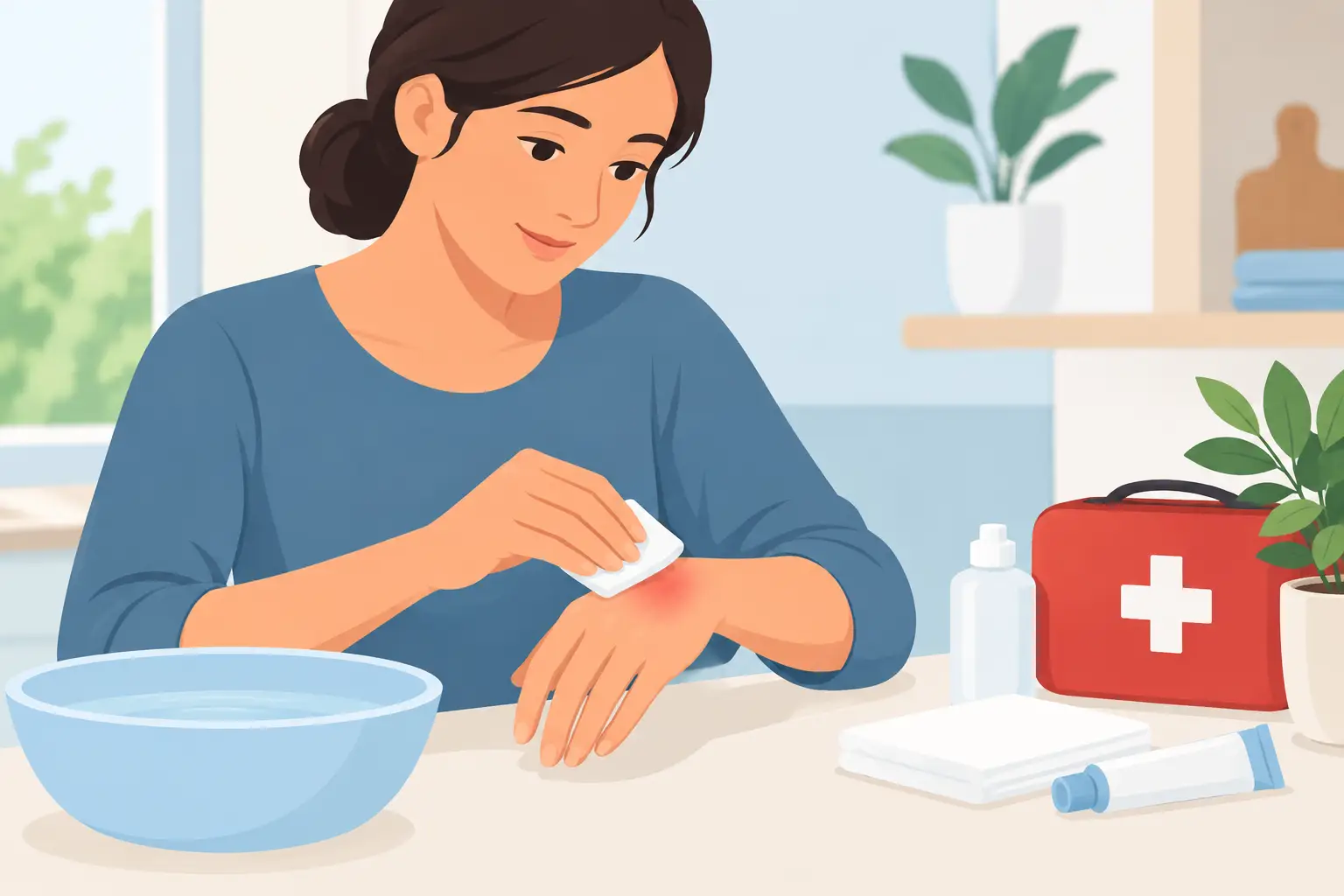
A splash of hot coffee, a baking sheet grabbed without an oven mitt, or too much time in the Florida sun can cause a burn in seconds. Knowing how to treat minor burns right away can reduce pain, limit skin damage, and help the area heal more comfortably.
Most small, superficial burns can be managed at home. The key is acting quickly, using simple first aid, and recognizing when a burn needs same-day medical evaluation instead of home care.
Start by Cooling the Burn
For a minor heat burn, place the affected area under cool running water as soon as possible. Keep it there for about 20 minutes. Cool water helps stop heat from continuing to damage the skin and may ease pain and swelling.
Use cool water, not ice water. Ice or frozen packs placed directly on a burn can injure already damaged skin and make the burn worse. A clean, cool, wet cloth can be used if running water is not available, but avoid pressing hard on the area.
While cooling the burn, remove rings, watches, bracelets, or tight clothing near the injury before swelling begins. Do not pull away clothing that is stuck to the skin. Cover it loosely and seek medical care instead.
How to Treat Minor Burns After Cooling
Once the skin has been cooled, gently pat the area dry with a clean cloth. A minor burn may look red, feel tender, and have mild swelling. It should not appear charred, white, leathery, or deeply damaged.
Apply a thin layer of plain petroleum jelly or aloe vera gel if the skin is intact. This can help keep the skin from drying out and reduce rubbing from clothing. Avoid products with fragrances, alcohol, or strong ingredients that may irritate the area.
Then cover the burn with a sterile, nonstick dressing or clean gauze. The covering should be loose enough to protect the skin without putting pressure on it. Change the dressing daily, or sooner if it gets wet or dirty.
For pain, an over-the-counter medication such as acetaminophen or ibuprofen may help when taken as directed on the label. Ibuprofen is not right for everyone, including some people with kidney disease, stomach ulcers, blood-thinning medication use, or certain medical conditions. When in doubt, ask a healthcare professional which option is appropriate for you or your child.
What Not to Put on a Burn
Home remedies can be tempting, especially when a burn stings. Some common approaches can trap heat, introduce bacteria, or irritate damaged skin.
Do not apply butter, cooking oil, toothpaste, egg whites, or powder to a burn. These products do not heal burned skin and may make it harder for a clinician to evaluate the injury if you need care. Avoid cotton balls or fluffy materials that can stick to the skin.
Do not break blisters. A blister is the body’s natural protective covering for injured skin. If it opens on its own, gently wash the area with mild soap and water, apply a small amount of petroleum jelly, and cover it with a nonstick bandage. Keep an eye out for increasing redness, drainage, or worsening pain.
Know What Counts as a Minor Burn
A minor burn is generally small, superficial, and limited to the top layers of skin. First-degree burns, such as mild sunburn, are red and painful but do not blister. Small superficial partial-thickness burns may blister and can often still be treated at home if they are limited in size and not in a high-risk area.
Size and location matter. Even a burn that initially looks small may need medical attention if it is on the face, hands, feet, genitals, buttocks, or over a major joint such as the wrist, elbow, knee, or ankle. Burns in these areas can affect movement, sensation, appearance, or daily function.
The same is true for burns that wrap all the way around a finger, arm, leg, or torso. Swelling can create pressure around the area, so prompt evaluation is the safer choice.
When to Visit Urgent Care for a Burn
Seek same-day urgent care if the burn is larger than the size of your palm, has significant blistering, or does not seem clearly superficial. You should also be evaluated if pain is severe or keeps getting worse after cooling the area.
A medical professional should examine a burn that appears white, brown, black, dry, leathery, numb, or unusually deep. These signs can indicate a deeper injury, even if the burn does not hurt as much as expected.
Watch for signs of infection in the days after a burn. Increasing redness, warmth, swelling, pus-like drainage, red streaks, fever, or a bad odor are reasons to get care promptly. A burn that is not beginning to improve within a few days also deserves attention.
Children, older adults, and people with diabetes, poor circulation, weakened immune systems, or nerve damage may need earlier evaluation. These conditions can make healing more difficult and raise the risk of complications.
At Express Care of Tampa Bay, walk-ins are welcome for many minor injuries that need prompt evaluation, dressing guidance, and treatment. No appointment is needed when you need a same-day answer about a burn that does not appear life-threatening.
Call 911 for Serious Burns
Some burns are emergencies and should not be treated at home or managed by urgent care alone. Call 911 immediately for a large or deep burn, a burn caused by electricity or chemicals, or any burn involving trouble breathing.
Smoke inhalation can be dangerous even when skin burns seem mild. Call 911 if someone was exposed to fire or smoke in an enclosed space, has burns around the mouth or nose, develops coughing, hoarseness, wheezing, dizziness, confusion, or shortness of breath.
Chemical burns need immediate flushing with cool running water. If the chemical is dry powder, brush it off before rinsing. Electrical burns can cause hidden internal injuries, so they need emergency evaluation even if the visible skin injury looks small.
Protect the Burn While It Heals
Keep the injured area clean, covered when needed, and protected from friction. A loose dressing can be especially helpful on hands, forearms, or areas that may rub against clothing. Avoid picking at peeling skin or scabs.
Once the skin has closed and is no longer raw, use sunscreen on the healed area when outdoors. New skin is especially sensitive to sunlight, and sun exposure can cause discoloration that lasts longer than the burn itself. In Tampa Bay, this matters year-round, not only during summer.
Check your tetanus vaccination status if the burn caused broken skin. Adults generally need a tetanus booster every 10 years, though a clinician may recommend one sooner for certain wounds. If you are unsure when you last had a tetanus shot, ask during your visit.
A minor burn should gradually become less painful and begin to heal over several days. Trust what you are seeing and feeling: if the injury looks deeper, hurts more, limits movement, or simply does not seem right, getting checked promptly is a practical next step.