
A rolled ankle can happen in seconds – stepping off a curb, landing awkwardly during a game, or missing a stair at home. Knowing how to treat a sprained ankle right away can ease pain, limit swelling, and help you avoid making the injury worse. The key is to protect the ankle early, pay attention to warning signs, and get an evaluation when you may need an X-ray or a brace.
What Happens During an Ankle Sprain?
An ankle sprain occurs when the strong bands of tissue that support the ankle, called ligaments, are stretched or torn. Most sprains happen when the foot rolls inward, affecting ligaments on the outside of the ankle. Pain, swelling, bruising, and difficulty putting weight on the foot are common.
Not every ankle injury is a simple sprain. A fracture, severe ligament tear, tendon injury, or dislocation can cause similar symptoms. That is why the amount of pain alone does not tell the whole story. Some people can walk on a fracture, while others cannot bear weight on a moderate sprain.
How to Treat a Sprained Ankle in the First 48 Hours
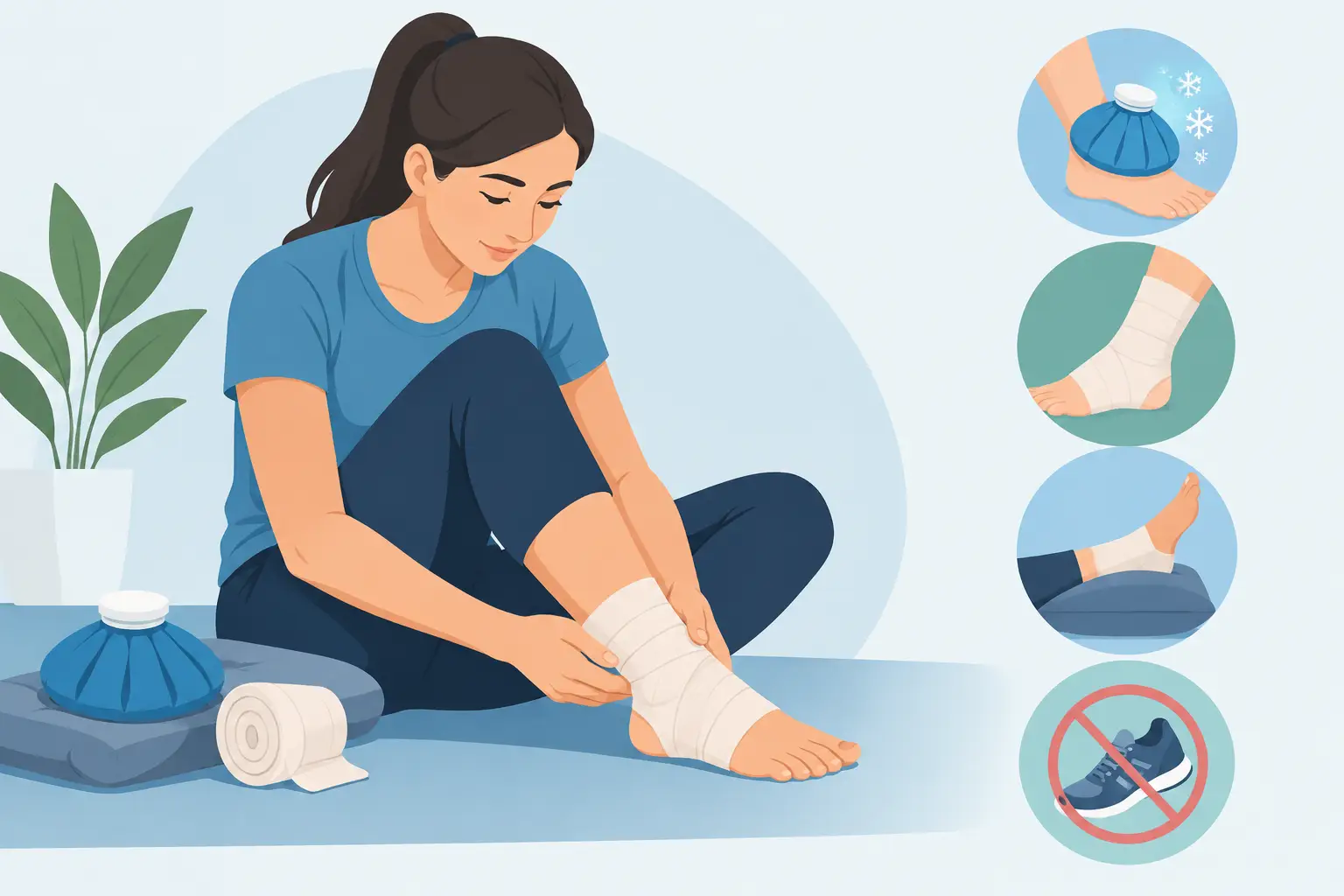
Start by protecting the ankle from further twisting or impact. Stop the activity that caused the injury and avoid trying to “walk it off” if each step is painful or unstable. A supportive shoe, elastic wrap, ankle brace, or crutches may help reduce stress on the joint while you determine how serious the injury is.
Rest does not have to mean staying completely still for days. In the first day or two, avoid running, jumping, long walks, and movements that increase pain. If you can gently move your toes and ankle without sharp pain, light movement may help prevent stiffness.
Cold packs can help with pain and swelling. Apply a cold pack wrapped in a thin towel for about 15 to 20 minutes at a time, then allow the skin to warm before using it again. Do not place ice directly on bare skin, and do not fall asleep with a cold pack on the ankle.
Compression can also help control swelling. An elastic bandage should feel supportive, not tight. Loosen it if your toes become numb, cold, pale, blue, or increasingly painful. Elevating the ankle above the level of your heart when resting can further reduce swelling, especially during the first couple of days.
For pain relief, some adults may be able to use acetaminophen or an anti-inflammatory medicine such as ibuprofen, following the package directions. However, anti-inflammatory medicines are not right for everyone. Ask a medical professional before using them if you have kidney disease, stomach ulcers, bleeding concerns, are taking blood thinners, or are pregnant.
What to Avoid Right After the Injury
The first 48 hours are not the time for deep massage, intense stretching, heat, or returning to sports. These may increase swelling or aggravate damaged tissue. Alcohol can also increase swelling and make it easier to misjudge the severity of the injury.
It is understandable to want a quick return to work, school, exercise, or a weekend activity. Pushing through ankle pain too soon is one of the most common reasons a sprain lingers. An ankle that feels unstable needs support and an appropriate recovery plan, not just determination.
When You May Need an X-Ray or Urgent Care Evaluation
A medical evaluation is a smart next step if you are unsure whether the ankle is sprained, broken, or severely injured. Urgent care can examine the joint, check circulation and sensation in the foot, and use digital X-rays when needed to look for a fracture.
Seek same-day care if you cannot take four steps without significant pain, have severe swelling or bruising, or have pain directly over the bony areas of the ankle or foot. You should also be evaluated if you heard a pop at the time of injury, the ankle feels unstable, or pain is getting worse instead of improving.
Get emergency care right away for an obvious deformity, an open wound near the joint, a foot that is cold or pale, loss of feeling, or severe pain after a high-impact injury. Those symptoms can point to a serious injury that should not wait.
Children, older adults, and people with diabetes, poor circulation, osteoporosis, or reduced sensation in their feet should be especially careful with ankle injuries. What appears to be a mild sprain may need earlier medical attention in these situations.
Getting Back on Your Feet Safely
Once swelling and pain begin to improve, gradual movement is part of recovery. Start with gentle ankle motions, such as pointing and flexing the foot or tracing the alphabet in the air with your toes. These exercises should create mild stretching, not sharp pain.
As walking becomes more comfortable, begin putting weight on the foot in a supportive shoe. An ankle brace may provide helpful stability during this stage, particularly if you are returning to a job that requires standing, walking, climbing, or working on uneven surfaces. The right amount of activity depends on the injury. A mild sprain may improve substantially within one to two weeks, while a more significant ligament injury can take several weeks or longer.
Balance and strengthening exercises matter because an ankle sprain can leave the joint more likely to roll again. Standing on one foot near a wall or counter, slowly raising onto your toes, and using a resistance band can help restore control as pain improves. If pain persists, a clinician may recommend physical therapy or additional evaluation.
Do not return to running, sports, or physically demanding work until you can walk without a limp and can move the ankle comfortably. Before returning to a sport, you should be able to hop, change direction, and balance without pain or a feeling that the ankle will give out.
When a “Minor” Sprain Is Not Getting Better
Most uncomplicated ankle sprains improve steadily with protection, support, and gradual movement. If you still have significant pain, swelling, instability, or difficulty walking after several days, it is time to be checked. Ongoing symptoms can indicate a missed fracture, a high ankle sprain, a tendon problem, or a more substantial ligament tear.
Pain higher above the ankle joint can be a clue to a high ankle sprain, which often takes longer to heal and may need a different treatment approach. Tenderness at the base of the fifth metatarsal, the bony bump along the outer side of the foot, also deserves attention because fractures can occur there after a rolling injury.
For Tampa Bay residents who need prompt answers, Express Care of Tampa Bay offers walk-in evaluation for minor injuries and on-site digital X-rays. No appointment is needed when an ankle injury needs a closer look.
A sprained ankle deserves more than a quick glance and a painful walk home. Protect it early, get checked when weight-bearing or swelling is a concern, and give the joint time to regain strength. Taking those steps now can make your next step much easier.