
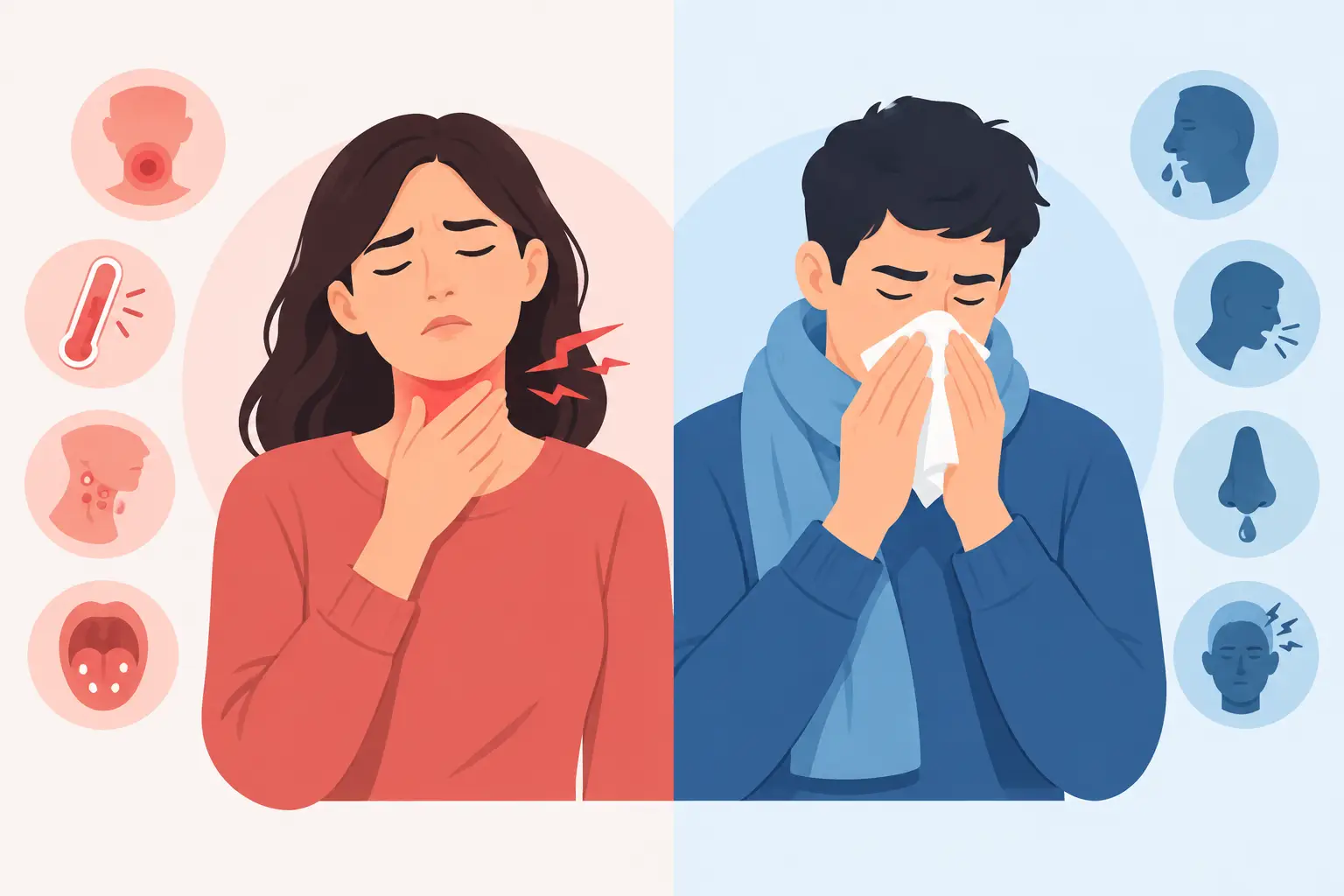
A sore throat can make a child miserable before school, leave an adult dreading a workday, or turn a normal weekend into a question: Is this just a cold, or could it be strep? When comparing strep throat versus common cold, the symptoms can overlap at first. The difference matters because strep throat may need antibiotic treatment after testing, while a common cold does not.
A prompt evaluation can replace guesswork with clear next steps. Walk-in urgent care can assess symptoms, perform appropriate testing, and help your family get the care they need without waiting days for a routine appointment.
Strep Throat Versus Common Cold: The Main Difference
Strep throat is a bacterial infection caused by group A Streptococcus bacteria. It commonly affects school-age children, though teens and adults can get it too. A common cold is caused by a virus. Many different viruses can produce cold symptoms, which is one reason colds are so common throughout the year.
Because one illness is bacterial and the other is viral, treatment is different. When a test confirms strep throat, a clinician may prescribe antibiotics. Taking antibiotics as directed can shorten the time a person is contagious and helps prevent certain complications. Antibiotics do not treat a cold and can cause side effects when they are not needed.
Symptoms alone cannot always confirm which illness you have. A throat exam and a rapid strep test, sometimes followed by a throat culture, can help determine whether strep is present.
Signs That Point More Toward Strep Throat
Strep throat often starts suddenly. Someone may feel fine or only mildly unwell, then develop significant throat pain over a short period. Swallowing can be painful, and the tonsils may look red, swollen, or have white patches or streaks of pus.
Other symptoms that can occur with strep include fever, tender swollen lymph nodes in the front of the neck, headache, body aches, and, especially in children, stomach pain, nausea, or vomiting. Some people develop a fine, rough-feeling rash known as scarlet fever.
One useful clue is what is not present. Strep throat usually does not cause a cough, runny nose, hoarseness, or red, watery eyes. Their absence does not prove strep, but it can make testing more appropriate when paired with a sore throat and fever.
Young children may not describe throat pain clearly. A child who refuses food, complains that swallowing hurts, has a fever, or seems unusually irritable may need an exam.
Symptoms More Typical of a Common Cold
A common cold usually builds gradually. It often begins with a scratchy throat, sneezing, or a runny nose, then progresses to congestion, coughing, mild fatigue, and sometimes a low-grade fever. Mucus may become thicker or change color as the cold progresses. Color alone does not mean an antibiotic is needed.
Cough and nasal symptoms are especially common with colds. You may also notice postnasal drip, mild sinus pressure, watery eyes, or a hoarse voice. Most cold symptoms improve with time, rest, fluids, and symptom relief measures.
A cold can still cause a sore throat, particularly early in the illness or when congestion causes mouth breathing. That is why a sore throat by itself is not enough to diagnose strep.
When Testing Is a Good Idea
Testing is often considered when a person has significant throat pain along with fever, swollen neck glands, red or enlarged tonsils, or white patches on the tonsils, particularly when cough and runny nose are absent. Exposure also matters. If a child has been around a classmate, sibling, or teammate with confirmed strep, mention that during the visit.
A rapid strep test can often provide results during the appointment. Depending on the result, age of the patient, symptoms, and clinical findings, a clinician may recommend a throat culture for additional confirmation. This is common when a child has a negative rapid test but the exam still strongly suggests strep.
Not every sore throat requires a strep test. If symptoms clearly point to a viral cold, testing may not be necessary. The right choice depends on the full picture, including age, symptoms, exposure history, and exam findings.
What to Do While You Wait for Care
For either a cold or a sore throat that may be strep, focus on comfort and hydration. Water, warm tea, broth, ice pops, and soft foods can be easier to tolerate when swallowing hurts. Adults and older children may find warm saltwater gargles soothing.
Over-the-counter fever and pain medicines may help when used as directed on the label and when appropriate for the patient. Parents should check with a healthcare professional about the right medication and dose for a child. Do not give aspirin to children or teenagers with viral symptoms because of the risk of Reye’s syndrome.
Avoid sharing cups, utensils, food, towels, or toothbrushes when someone in the household has throat symptoms. Frequent handwashing and covering coughs and sneezes help limit the spread of both bacterial and viral illnesses.
If strep is confirmed and antibiotics are prescribed, take the full course exactly as directed, even if symptoms improve quickly. A person with strep should generally stay home from school, work, or close-contact activities until they have been on antibiotics for at least 24 hours, are fever-free without fever-reducing medicine, and feel well enough to participate. Follow the clinician’s individual guidance.
When a Sore Throat Needs Prompt Medical Attention
Most colds and many sore throats can be managed without emergency care, but certain symptoms should not wait. Seek prompt evaluation for severe throat pain, a fever that is high or persistent, symptoms that are worsening instead of improving, dehydration, or a rash with fever.
Emergency care is appropriate for trouble breathing, inability to swallow saliva, drooling, severe neck swelling or stiffness, confusion, blue or gray lips, signs of severe dehydration, or a rapidly worsening condition. Infants, older adults, people with weakened immune systems, and those with significant chronic medical conditions may need earlier evaluation.
A sore throat lasting more than a few days, repeated strep infections, or symptoms that return after treatment also deserve a medical visit. Other conditions, including influenza, COVID-19, allergies, mono, and sinus infections, can cause symptoms that overlap with a cold or strep throat.
Get Clear Answers Without the Wait
When symptoms are disrupting school, work, sleep, or family plans, it helps to have a local place to turn for timely evaluation. Express Care of Tampa Bay offers walk-in care for common cold symptoms, sore throats, and other non-emergency illnesses, with diagnostic testing available when clinically appropriate. No appointment is needed.
A sore throat may be a passing cold symptom, or it may be a reason to test for strep. Listening to the pattern of symptoms, watching for warning signs, and getting checked when the answer is unclear can help you make the next decision with confidence.