
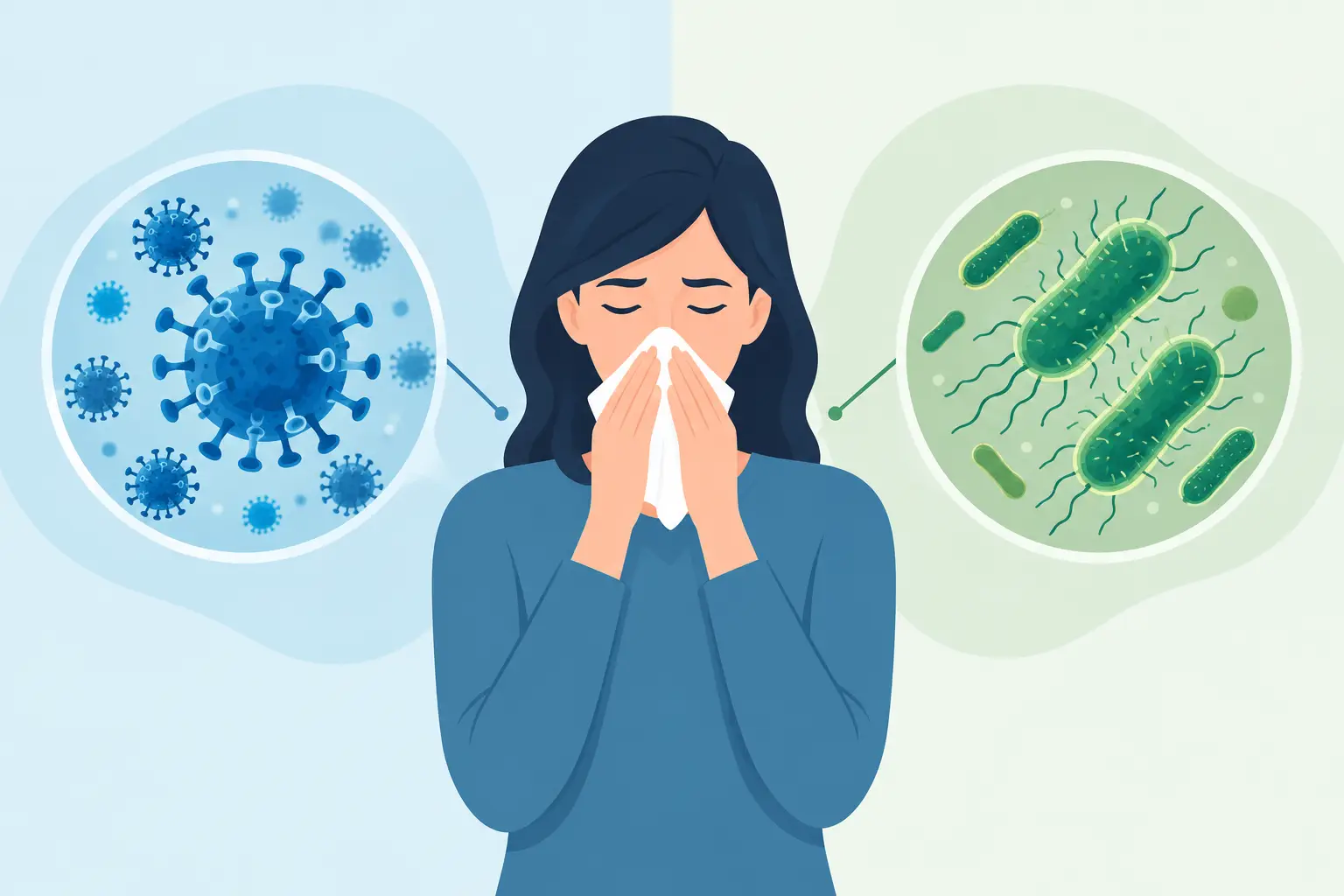
A sore throat, cough, fever, or upset stomach can disrupt work, school, and family plans quickly. But viral versus bacterial infection is not always something you can determine from symptoms alone. Many illnesses feel similar at the start, while the right treatment can be very different. A prompt medical evaluation can help you get clear answers and avoid medication you do not need.
What Is the Difference Between Viral and Bacterial Infections?
Viruses and bacteria are different kinds of germs. A virus is a tiny infectious particle that needs human cells to reproduce. Common viral illnesses include colds, influenza, COVID-19, viral gastroenteritis, and many cases of bronchitis.
Bacteria are single-celled organisms. Some live harmlessly in and on the body, while others can cause infection. Examples include strep throat, many urinary tract infections, certain skin infections, and some types of pneumonia.
The difference matters because antibiotics treat bacterial infections, not viral ones. Taking an antibiotic for a virus will not make the illness go away faster. It can also cause side effects such as diarrhea, nausea, allergic reactions, or yeast infections. Over time, unnecessary antibiotic use contributes to antibiotic resistance, making some bacterial infections harder to treat.
That said, the answer is not always as simple as “virus equals no treatment” and “bacteria equals antibiotics.” Some viral illnesses need prescription antiviral medication when started early, especially for people at higher risk of complications. Some mild bacterial infections may be monitored before antibiotics are prescribed. Your symptoms, exam findings, medical history, age, and test results all help guide the decision.
Viral Versus Bacterial Infection Symptoms: What You May Notice
Symptoms overlap significantly. Fever, fatigue, sore throat, body aches, congestion, cough, nausea, vomiting, and diarrhea can occur with either type of infection. This is why it is risky to diagnose yourself based on one symptom or an internet checklist.
Viral infections often cause widespread symptoms, such as body aches, runny nose, cough, and fatigue. A cold may build gradually over a few days. Influenza can start much more suddenly with fever, chills, muscle aches, and exhaustion. Viral stomach illnesses often cause vomiting and diarrhea that improve with time, rest, and careful hydration.
Bacterial infections can be more localized. A urinary tract infection may cause burning with urination, frequent urination, pelvic pressure, or blood in the urine. Strep throat may cause a severe sore throat, fever, swollen neck glands, and pain with swallowing. A bacterial skin infection can cause spreading redness, warmth, tenderness, swelling, or drainage.
Still, there are exceptions. Green or yellow mucus alone does not prove a bacterial infection. A high fever does not automatically mean bacteria are the cause. Likewise, a viral infection can sometimes lead to a secondary bacterial infection, such as sinusitis, an ear infection, or pneumonia.
Illness Patterns That Deserve a Closer Look
A medical evaluation is especially helpful when symptoms are severe, persistent, or getting worse after they initially improved. For example, a cold that seems to improve and then returns with new fever and facial pain may need assessment. A cough with shortness of breath, chest pain, or worsening fever should also be checked promptly.
For children, parents should pay close attention to behavior and hydration. A child who is unusually sleepy, difficult to wake, breathing hard, refusing fluids, or producing very few wet diapers needs prompt medical attention. Older adults and people with chronic conditions may also become seriously ill more quickly, even when early symptoms seem mild.
How Testing Helps Identify the Cause
A clinician can often narrow down likely causes through your symptoms and physical exam. In many cases, testing provides the confirmation needed to choose the right treatment.
A rapid strep test or throat culture can check for strep throat. A nasal swab may test for flu, COVID-19, or other respiratory viruses. Urinalysis can identify signs of a urinary tract infection, and a urine culture may help identify the specific bacteria and which antibiotic is likely to work. Swabs of certain wounds or skin infections can also be useful.
Blood work may be appropriate when symptoms are more significant or the diagnosis is unclear. If pneumonia, a fracture, or another condition is a concern, imaging such as a digital X-ray may be part of the evaluation.
Testing is not needed for every cold or brief stomach illness. When symptoms are mild and improving, supportive care may be the right plan. But testing can be valuable when it changes treatment, helps protect vulnerable family members, or clarifies whether you can safely return to work or school.
Treatment Depends on the Infection and the Patient
For most viral infections, treatment focuses on helping you feel better while your immune system clears the illness. Rest, fluids, fever reducers or pain relievers when appropriate, and medication for symptoms such as congestion or nausea may be recommended. Your clinician can also discuss whether antiviral treatment is appropriate, since timing can matter for influenza and certain other viral illnesses.
Bacterial infections may require antibiotics, but the antibiotic should match the suspected infection. It is important to take the medication exactly as prescribed and complete the course unless your clinician tells you otherwise. Do not save leftover antibiotics for another illness or share them with someone else.
If you receive antibiotics and develop hives, facial swelling, trouble breathing, severe diarrhea, or worsening symptoms, seek medical care right away. Let your clinician know about any previous medication reactions before treatment begins.
Hydration is important for both viral and bacterial illnesses. Small, frequent sips of water, oral rehydration fluids, or clear broths can be easier to tolerate when nausea is present. For diarrhea or vomiting, watch for dehydration signs such as dry mouth, dizziness, dark urine, reduced urination, or unusual weakness.
When to Visit Urgent Care
Same-day care can be a practical choice when you need an exam, testing, or treatment but your condition is not life-threatening. Consider being seen for persistent fever, a severe sore throat, ear pain, urinary symptoms, a worsening cough, dehydration concerns, a rash with fever, or a painful skin area that is red or spreading.
Express Care of Tampa Bay can evaluate many common respiratory, gastrointestinal, urinary, and skin concerns with walk-in access, on-site testing, and digital X-rays when appropriate. No appointment is needed for many non-emergency illnesses, and telehealth may be an option for eligible concerns.
Go to an emergency department or call 911 for trouble breathing, chest pain, confusion, fainting, blue lips or face, severe allergic reaction symptoms, uncontrolled bleeding, sudden weakness on one side of the body, or signs of severe dehydration. Infants younger than 3 months with a fever should receive urgent medical guidance.
Preventing the Spread at Home and Work
Whether an illness is viral or bacterial, simple precautions can lower the chance of spreading it. Wash hands well with soap and water, especially after coughing, sneezing, using the restroom, or caring for someone who is sick. Cover coughs and sneezes, clean frequently touched surfaces, and avoid sharing drinks, utensils, towels, or lip products.
Stay home when you have fever, vomiting, diarrhea, or symptoms that make it difficult to work safely. Ask a clinician when it is appropriate to return to school, work, sports, or other close-contact activities. The answer may depend on your diagnosis, whether you have started treatment, and how you are feeling.
When symptoms leave you wondering whether you need antibiotics, do not guess. A timely evaluation can identify what is most likely causing the illness, provide treatment that fits your situation, and help you get back to your routine with greater confidence.